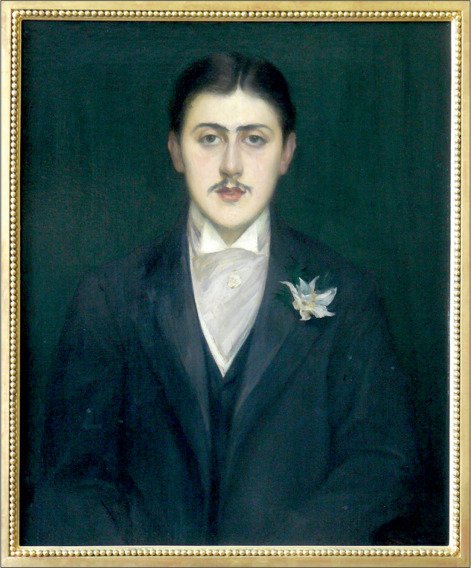
As his death anniversary approaches, Marcel Proust remains one of literature’s sharpest observers of how easily human beings squander the present. For all our complaints about physical frailty, shifting affections, social artifice, compromised friendships, and the dulling weight of routine, we rarely live as though our time is finite. Yet when mortality suddenly feels near, the very life we took for granted, or treated as an endless chore, can abruptly regain its luster.
The Apocalypse Question in L’Intransigeant
In the summer of 1922, the Paris newspaper L’Intransigeant posed an elaborate thought experiment to notable figures: if an American scientist confirmed a sudden cataclysm that would wipe out a massive portion of the continent and claim hundreds of millions of lives, how would people behave in the interval before disaster struck, and what would the respondent do in the final hour?
Someone looking for a paper to read in Paris in the 1920s might have picked up a title called L’Intransigeant. It had a reputation for investigative news, metropolitan gossip, comprehensive classifieds and incisive editorials. It also had the habit of dreaming up big questions and asking French celebrities to send in their replies. “What do you think would be the ideal education to give your daughter?” was one. “Do you have any recommendations for improving traffic congestion in Paris?” was another.
The answers offered a study in contrasting impulses:
An American scientist announces that the world will end, or at least that such a huge part of the continent will be destroyed, and in such a sudden way, that death will be the certain fate of hundreds of millions of people. If this prediction were confirmed, what do you think would be its effects on people between the time when they acquired the aforementioned certainty and the moment of cataclysm? Finally, as far as you’re concerned, what would you do in the last hours.
- Henri Bordeaux imagined crowds rushing toward churches or bedrooms, while choosing for himself a mountain climb to take in alpine scenery and flora.
- Berthe Bovy suggested that freedom from long-term consequences might strip away social inhibitions.
- Madame Fraya predicted worldly indulgence would crowd out thoughts of the afterlife, a view echoed by Henri Robert, who declared he would spend his last stretch playing bridge, tennis, and golf.
Proust’s Reply and His Paradox
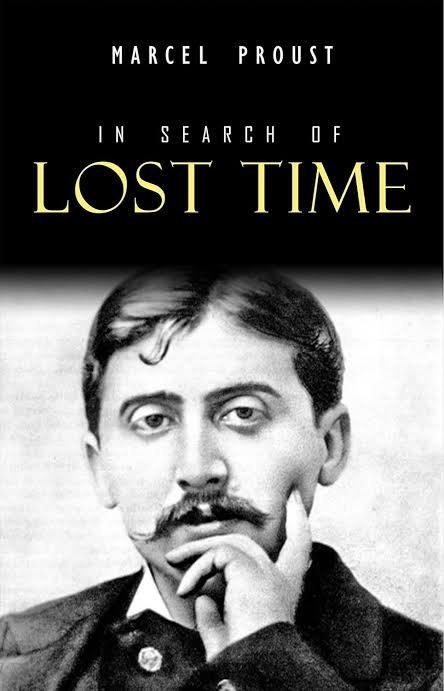
Proust, then a reclusive novelist who had spent roughly fourteen years writing beneath woolen blankets in a narrow bed, earning high praise for In Search of Lost Time even as he struggled with self-doubt, answered with characteristic candor. A looming threat of death, he wrote, would suddenly make life seem wonderful by exposing the projects, travels, studies, and passions hidden by everyday laziness and the illusion of an endless future. Yet once the danger passed, ordinary negligence would dull desire again, even though awareness that death could arrive that very evening ought to be enough to make us love life today.
Still, Proust’s proposed last-hour indulgences, such as visiting new Louvre galleries, throwing himself at the feet of “Miss X,” or traveling to India, sat awkwardly beside his own habits. He rarely visited museums, had not been to the Louvre in over a decade, faced an arduous journey to reach India, and had long shown little inclination toward romantic pursuit of women.
Four Months Later, and a Lifetime’s Work
Only four months after his L’Intransigeant reply, at age fifty-one, Proust’s long-feared decline caught up with him. Having gone out to a party despite flu symptoms wrapped in multiple coats and blankets, he caught a chill waiting for a taxi in a freezing courtyard. The illness progressed into bronchitis and pneumonia; wary of interrupting his writing, he declined camphorated oil injections offered by doctors and survived largely on hot milk, coffee, and stewed fruit. A brief spark of hope, when he sat up to ask for grilled sole, faded when nausea kept him from eating, and he died hours later from a burst lung abscess.
I think that life would suddenly seem wonderful to us if we were threatened to die as you say. Just think of how many projects, travels, love affairs, studies, it—our life—hides from us, made invisible by our laziness which, certain of a future delays them occasionally.
But let all this threaten to become impossible forever, how beautiful it would become again! Ah! If only the cataclysm doesn’t happen this time, we won’t miss visiting the new galleries of the Louvre, throwing ourselves at the feet of Miss X, making a trip to India.
The cataclysm doesn’t happen, we don’t do any of it, because we find ourselves back in the heart of normal life, where negligence deadens desire. And yet we shouldn’t have needed the cataclysm to love life today. It would have been enough to think that we are humans, and that death may come this evening.
Even if a sudden end can tempt us into rushed or contradictory gestures, Proust’s larger answer lay in the long novel he worked on until death. Whatever his misgivings about its title, In Search of Lost Time pointed toward understanding why time slips away, not merely as a nostalgic chronicle of a vanished era, but as an enduring invitation to examine our priorities before time runs out.
Feeling suddenly attached to life when we realize the imminence of death suggests that it was perhaps not life itself which we had lost the taste for – so long as there was no end in sight, but our quotidian version of it, that our dissatisfactions were more the result of a certain way of living than anything irrevocably morose about human experience. Having surrendered the customary belief in our own immortality, we would then be reminded of a host of untried possibilities lurking beneath the surface of an apparently undesirable, apparently eternal existence.
However, if due acknowledgment of our mortality encourages us to reevaluate our priorities, we may well ask what these priorities should be. We might only have been living a half-life before we faced up to the implications of death, but what exactly does a whole life consist of? Simple recognition of our inevitable demise does not guarantee that we will latch on to any sensible answers when it comes to filling in what remains of the diary. Panicked by the ticking of the clock, we may even resort to some spectacular follies. The suggestions sent by the Parisian celebrities to L’lntransigeant were contradictory enough: admiration of alpine scenery, contemplation of the extraterrestrial future, tennis, golf. But were any of these fruitful ways to pass the time before the continent disintegrated.
About the Author