
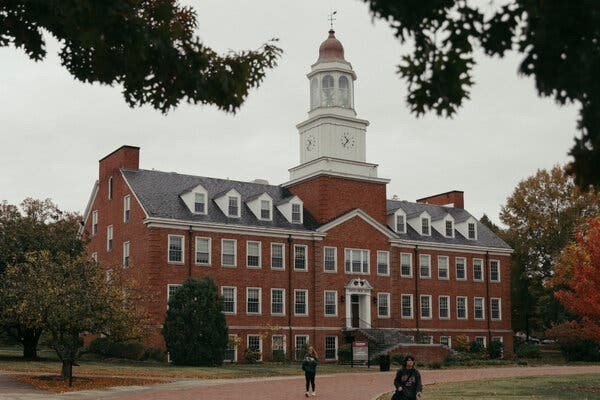
At Transylvania University, in Lexington, Ky., a third of students signed a petition protesting the school’s investment in generative artificial intelligence tools.Credit...Madeleine Hordinski
A growing wave of students and faculty is resisting the rapid spread of generative artificial intelligence across colleges and universities, with some refusing to use AI altogether and others organizing petitions to curb its institutional adoption. While most students still use chatbots for coursework and many university leaders promote them as workforce preparation, critics argue that AI can undermine genuine learning, harm the environment, weaken worker leverage, and raise legal and privacy questions.
Student Petitions and Conscientious Objectors
Resistance has surfaced from small liberal arts colleges to major research universities and international campuses, accompanied by manifestoes calling on schools to end AI partnerships, avoid mandating AI in teaching or grading, and let students opt out of AI-required assignments without grade penalties. At Transylvania University in Lexington, Kentucky, a student petition led last spring by senior Alice Beatty urged officials to drop chatbot licenses and redirect funds toward human-centered education, drawing signatures from roughly a third of the student body after reporting on the school’s $120,000 spending on ChatGPT and Gemini licenses.

Some individuals have taken refusal even further, including a research employee at the University of Kentucky who received a religious exemption from using AI. Critics such as University of Utah English professor Hollis Robbins argue that unclear campus AI rules fuel conscientious objection, suggesting colleges drop easily cheated take-home assignments and rethink online courses plagued by misconduct.
Universities Reassessing Policies
As debate intensifies, some institutions are adjusting how they introduce AI on campus. Georgetown University, which rolled out free Gemini access in March and saw cautious or negative sentiment outweigh positive views in student focus groups, announced plans under new president Eduardo M. Peñalver to form a faculty committee on AI principles, clarify course rules, and expand tech-free spaces and in-person assessments while continuing to offer free access and encouraging AI literacy.

Meanwhile, educators such as Georgetown Law’s Emily Tucker and Cornell psychology and computer science professor Shimon Edelman have signed an open letter opposing the push for generative AI adoption, warning about cognitive offloading, flawed citations, and shallower learning. Among students, attitudes can also divide social circles or take more nuanced forms, as seen with Whitman College senior Emmali Simmelink and Rider University student Preston Hicks, who shares artistic skepticism of AI while weighing practical administrative uses as a future teacher.
About the Author