
LEO POLD DAUPHIN
Saturday Morning (10 May 1884)
I’m leaving for the country, still sad at not having seen you the day before yesterday. As for
telling you about the organ concert, it’s not that I’m unwilling to do so, especially if we could
be face to face, for you are always so ready to be charming. But, on my soul, all that I heard and
noted cannot be said in any other form than a poem or a book: above all it’s the rise of a star of
shadow, contemplated at last with joy and terror by a mind that the absolute fills with despair;
the shapeless pounding of waves of darkness which, by a miracle analyzed at length, happen to break
and beat, here and there, on cliffs pure of all existence, rising up with all the height of their
absence. You can see that even Guilmant1 didn’t expect this. I saw nothing that could go in the
newspaper; all I did was listen to the organ, with or without the orchestra. I was filled with
despair when the audience encored the solos, “Eternity,” by Madame de Granval, who accompanied on
the piano a gentleman (Quirot}, who possesses a bass voice; and “Remem ber” by Massenet,
exquisitely sung by Madame Brunet Lafleur, one of that trio. The real marvel was the largo for
organ, harps, and orches tra by Handel, which was like closed mouths and tied tongues accom
panying in an obstinate muteness the revealing complaint of a violin, and finally confessing all
and saying more than the violin itself. You can laugh, but you see I listen like an incorrigible
poet. The same instruments gave a delicious performance of a March based on two Church songs, by
Guilmant, and were very successful. But you have the program, in which at a single glance you’ll
read more than I could tell you and from the proper point of view. There was an enormous crowd, and
not just English people and organists as used to be the case: it’s becoming absolutely the done
thing, thanks, I believe, to the Calonne competition. Once or twice I even felt in this crowd a
kind of special intuition of what the great festivals must be like; where the organ, formerly the
god, today the voice of the people, will reign, in the future. But you and I won’t see that happen.
Now that’s really intercsting!2
I’ve often thought that the only way to create a review was to do it on one’s own; make it above
all about doctrine, even more than filling it with your trunkloads of written work, even something
as charming as your short story. This year, when we’ll be following your progress, can count for
you as a decisive campaign. By this I mean that I en joyed your criticism above all, finding it
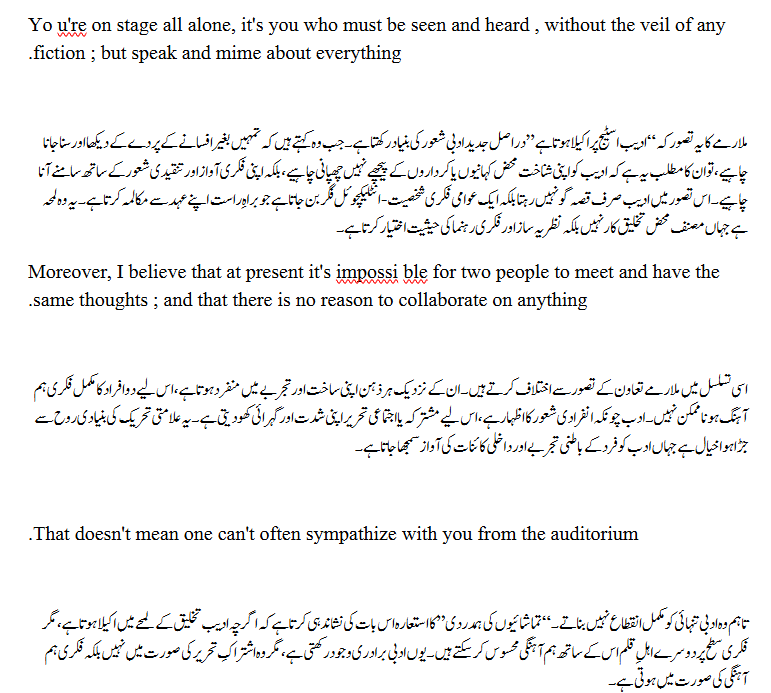
penetrating and subtle. You’re on stage all alone, it’s you who must be seen and heard, without the
veil of any fiction; but speak and mime about everything.
Moreover, I believe that at present it’s impossible for two people to meet and have the same
thoughts; and that there is no reason to col laborate on anything.
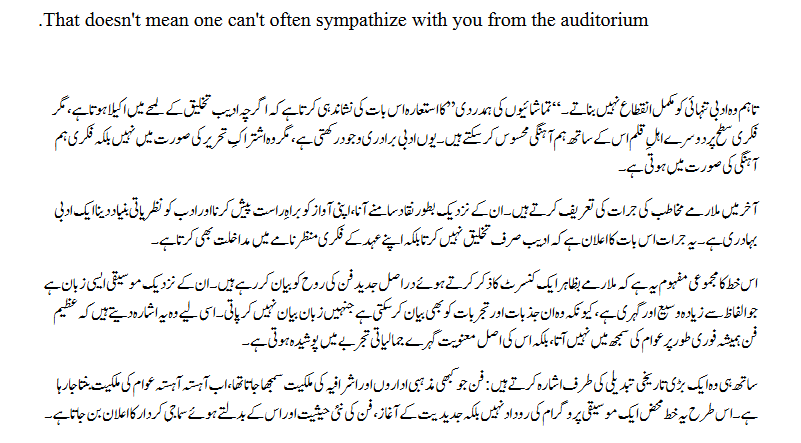
That doesn’t mean one can’t often sympathize with you from the auditorium. And that’s what I for my
part am doing as I shake you
by the hand; and firstly for your bravura.
- A. Guilmant, composer of a Fantasy March for organ, harps and orchestra that
2.Mallarme had just received the first number of Barrcs’s review, Les Taches
d’encre.
About the Author