White House Announces Major Policy Shift — Millions of Americans to Get Student Debt Relief Under New Agreement
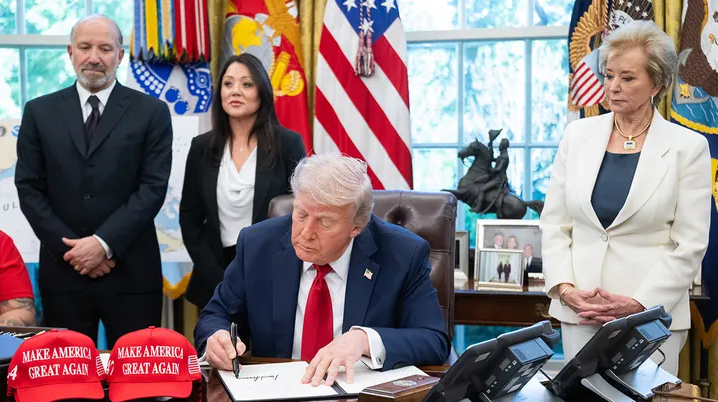
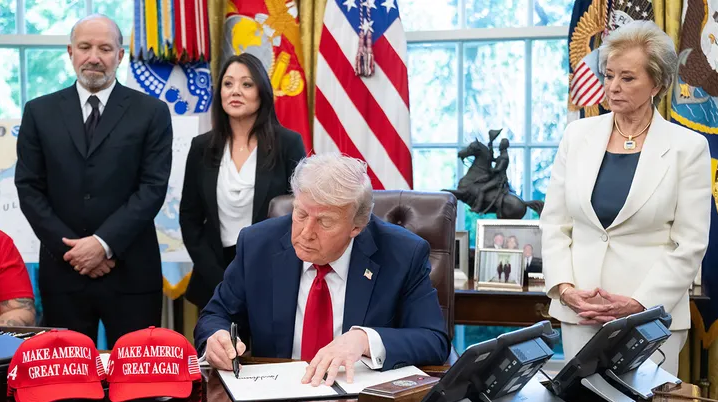
In a surprising turn of events, the Trump administration has agreed to cancel student loan debt for millions of borrowers, marking a sharp departure from its earlier stance against widespread loan forgiveness. The decision comes after an agreement with the American Federation of Teachers (AFT) and is expected to bring relief to millions struggling with federal student debt across the United States.
According to the new arrangement, the White House has directed the Department of Education to resume processing loan forgiveness applications for borrowers enrolled in two income-driven repayment programs — Income-Contingent Repayment (ICR) and Pay As You Earn (PAYE). These programs, which were previously halted, will continue to operate until they are phased out by July 1, 2028, under President Trump’s “Big, Beautiful Bill,” a policy initiative aimed at restructuring the federal student loan system.
Higher education experts estimate that more than 2.5 million borrowers are currently enrolled in the two repayment plans, and the revival of these programs is expected to provide immediate relief to a significant portion of them.
“This is a tremendous win for borrowers,” said Winston Berkman-Breen, Legal Director for Protect Borrowers, a group that represented the teachers’ union in the lawsuit that led to the new agreement. “With today’s filing, borrowers can rest a little easier. The Department of Education has agreed to follow the law and deliver congressionally mandated affordable payments and debt relief to hard-working public service workers across the country — and they will do so under court supervision. We fully intend to hold them accountable.”
Under the terms of the agreement announced Friday, borrowers who qualify for student loan forgiveness this year will not be required to pay federal taxes on the forgiven amount, a move that further enhances the relief’s impact. This exemption ensures that debt cancellation does not translate into a new tax burden for the beneficiaries — a concern frequently raised in previous forgiveness programs.
The Department of Education has not yet issued a formal statement in response to media inquiries, including requests from The Washington Post. However, the administration has confirmed that the process of reviewing and approving eligible borrowers’ applications will begin immediately.
This breakthrough follows months of legal wrangling and public pressure from teachers, unions, and borrower advocacy groups. In March, the AFT, which represents about 1.8 million members, filed a lawsuit against the administration, accusing officials of blocking access to debt relief programs that were in place when many borrowers initially took their loans.
According to the AFT’s legal complaint, Trump officials had unlawfully suspended the processing of forgiveness requests under specific income-driven repayment plans, leaving borrowers in financial limbo. The lawsuit alleged that such actions violated both federal law and the contractual promises made to borrowers.
Earlier this year, the White House had paused debt cancellation under some income-driven repayment plans, citing ongoing litigation and administrative uncertainty. These plans — such as ICR and PAYE — calculate a borrower’s monthly payments based on their income and family size, and typically forgive any remaining balance after 20 or 25 years of consistent payments.
The Trump administration, led by Education Secretary Linda McMahon, defended its earlier pause by arguing that the programs were legally constrained by a court order that had temporarily halted implementation of the Biden-era “SAVE Plan” (Saving on a Valuable Education) — another income-driven repayment option introduced in 2023.
However, Friday’s agreement signals a significant policy reversal. The administration has now acknowledged that the previous restrictions unfairly penalized borrowers who were entitled to relief under existing laws and programs. As part of the settlement, the government has pledged to process forgiveness applications efficiently and transparently, with oversight to ensure compliance.
The temporary suspension of loan forgiveness earlier this year had left borrowers with only one available option for potential debt cancellation — the Income-Based Repayment (IBR) plan. But many found that plan too restrictive or difficult to qualify for, leading to frustration and financial uncertainty among millions of Americans who had been counting on relief.
Education policy experts note that the administration’s change of course reflects not only the growing political pressure surrounding student debt but also the practical necessity of providing economic relief amid rising living costs. With student debt surpassing $1.7 trillion nationwide, it remains one of the biggest financial burdens facing American households.
Winston Berkman-Breen emphasized that while the agreement represents an important victory, vigilance will be necessary to ensure that the Education Department fulfills its obligations. “This is not the end of the fight,” he said. “Borrowers must continue to monitor how the administration enforces this settlement and whether it genuinely delivers on its promises.”
According to analysts, the timing of this announcement is also politically significant. With the 2026 midterm elections approaching, the Trump administration is eager to demonstrate responsiveness to economic issues affecting everyday Americans — particularly the middle-class voters who have long struggled under the weight of student loans.
Critics, however, argue that this move may also be an attempt to soften the administration’s image following its earlier efforts to block portions of the Biden administration’s student debt relief initiatives. “This is a calculated policy correction,” said one Washington-based policy analyst. “After months of backlash and lawsuits, the administration needed to show that it is not indifferent to the plight of student borrowers.”
Under the new framework, the Income-Contingent Repayment (ICR) and Pay As You Earn (PAYE) programs will continue until mid-2028, after which they are expected to be replaced by new, consolidated repayment models under the upcoming education reform bill. The administration has hinted that these future models will be “simpler, fairer, and fiscally responsible,” though specific details have not yet been released.
Borrower advocacy groups remain cautiously optimistic. They note that if the administration follows through on its commitments, millions could finally see the end of decades-long debt cycles. Many public service workers — including teachers, nurses, and government employees — stand to benefit the most from this decision.
As the legal dust settles, economists suggest that widespread debt forgiveness could inject billions of dollars back into the economy, as relieved borrowers redirect their income toward housing, family needs, and savings. “This is not just about wiping debt; it’s about stimulating economic growth from the ground up,” said one senior economist at the Brookings Institution.
For now, millions of Americans burdened by student loans are breathing a sigh of relief. After years of uncertainty, the federal government’s renewed commitment to honoring its debt forgiveness programs marks a hopeful new chapter. Whether this marks a lasting policy shift or a temporary political maneuver remains to be seen — but for countless borrowers, it represents long-awaited justice and a long-overdue promise finally being kept.
About the Author