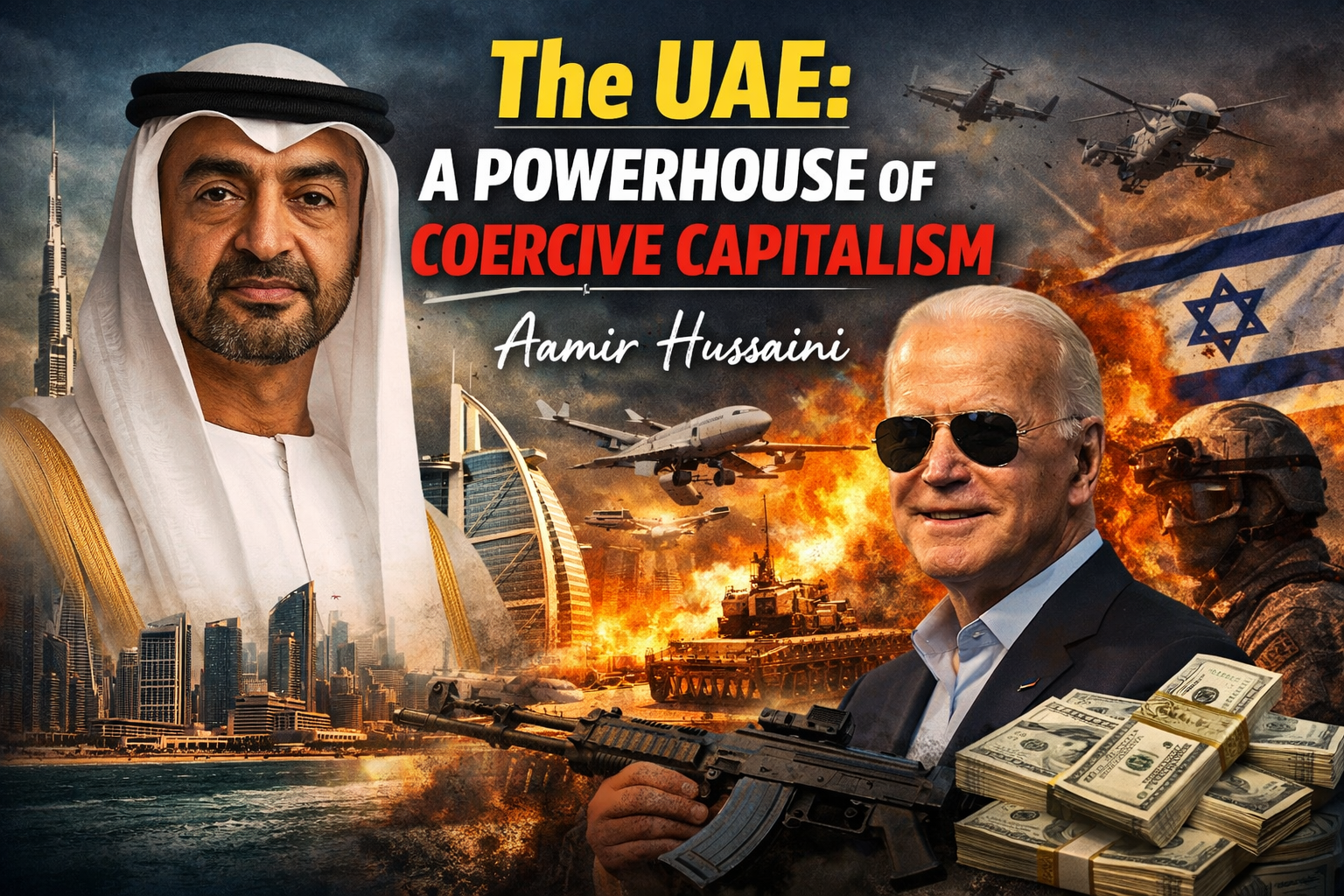
Coercive Capitalism: A Definition and Its Contradiction with the Liberal Myth of Capitalism
Coercive capitalism refers to a form of capitalism in which the accumulation of capital and the expansion of markets are sustained not primarily through voluntary exchange or free competition, but through systems of coercion, political authority, legal compulsion, and structural power. In such systems, the state, security apparatus, legal frameworks, and social hierarchies play a decisive role in disciplining labor, restricting dissent, controlling migration, and guaranteeing the uninterrupted flow of profits to capital.
In coercive capitalism, the market does not operate in a purely “free” or neutral environment. Instead, the state and dominant economic elites actively shape the conditions of production and exchange through policies, laws, and enforcement mechanisms that constrain workers’ bargaining power and limit political participation. Coercion can take multiple forms: restrictive labor laws, suppression of trade unions, surveillance, migration controls, debt dependency, and the criminalization of protest.
This understanding stands in sharp contrast to the claim often made by pro-capitalist intelligentsia, who portray capitalism as a system grounded in peaceful voluntary exchange, democratic governance, and free-market competition. According to this liberal narrative, individuals enter economic relationships freely, and markets function as arenas of mutually beneficial cooperation where the rule of law ensures fairness and equality of opportunity.
However, historical and empirical evidence challenges this idealized image. From the earliest phases of capitalist development—such as enclosures in Europe, colonial expansion, and the forced creation of labor markets—to contemporary global supply chains, capitalism has repeatedly relied on coercive institutions to secure labor, resources, and markets. Even in advanced capitalist societies, the supposed neutrality of the market is underpinned by state power, legal enforcement, and unequal social structures.
Thus, coercive capitalism highlights a fundamental contradiction: while capitalism is often justified ideologically as a system of freedom and voluntary exchange, in practice it frequently depends on forms of political and economic coercion to maintain profitability and social order. The rhetoric of “free markets” obscures the extent to which markets are embedded in relations of power, hierarchy, and institutional force.
In this sense, coercive capitalism is not an anomaly but rather a structural feature of capitalist development, revealing the tension between capitalism’s liberal self-image and its historically grounded realities of control, discipline, and inequality.
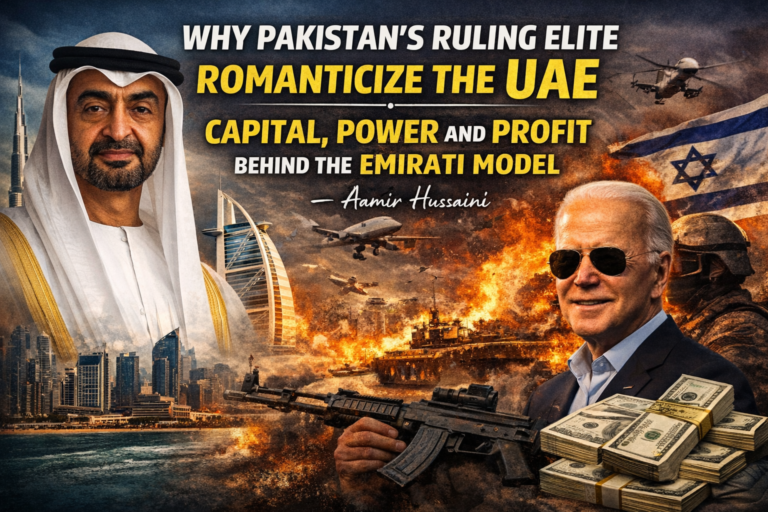
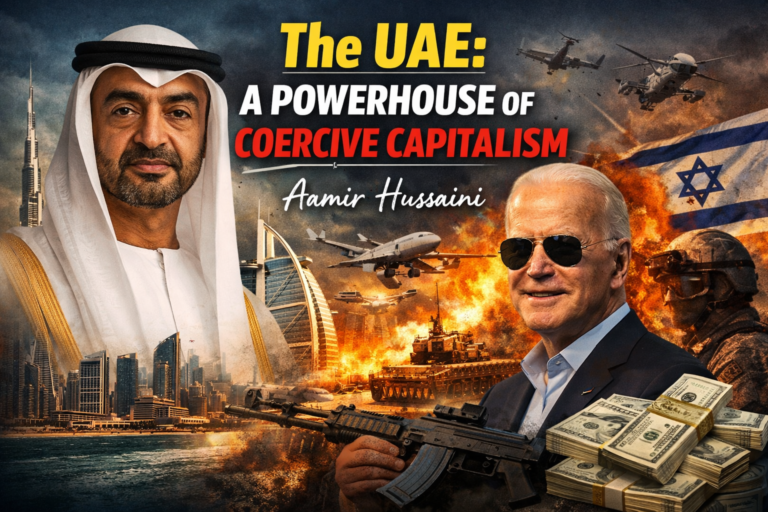
As the United States and Israel escalate their confrontation with Iran, attention must turn not only to the immediate protagonists of war but also to the states that quietly sustain the infrastructure of imperial power. Among them, the United Arab Emirates occupies a particularly revealing position. Over the past two decades, the UAE has emerged as a central node in what can best be described as coercive capitalism—a system in which capital accumulation, geopolitical strategy, and authoritarian state power operate as a single integrated apparatus.
On September 23, 2024, President Joe Biden formally designated the UAE a “major defense partner,” a status previously granted only to India. The announcement came during Sheikh Mohamed bin Zayed Al Nahyan’s historic visit to the White House, the first ever by an Emirati president. Less than a year later, on May 16, 2025, U.S. Secretary of Defense Pete Hegseth reaffirmed the relationship in Abu Dhabi, signing a letter of intent committing the two countries to long-term military cooperation in “force readiness, interoperability, and innovation.” In practice, the agreement consolidates an already deep alliance: the UAE hosts American military infrastructure, purchases vast quantities of U.S. weaponry, trains alongside American forces, and increasingly integrates its defense and surveillance technologies with those of the United States.
For the Al Nahyan ruling family, this partnership represents the culmination of a long strategic project. Since the 1980s, the Emirati monarchy has systematically positioned its small petro-state as an indispensable ally within the American military-industrial order. The UAE functions simultaneously as a logistical platform for Western military operations, a financial hub for global capital, and a political intermediary in regional conflicts. In doing so, it demonstrates how contemporary capitalism often thrives not through democratic markets but through tightly controlled alliances between capital, state authority, and military force.
The ideology of free-market capitalism insists that prosperity arises from voluntary exchange and peaceful trade. The Emirati model tells a very different story. At home, the glittering skyline of Dubai is built upon a labor regime that subjects millions of migrant workers to extreme legal and economic vulnerability. Political dissent is tightly suppressed through surveillance, censorship, and imprisonment. Abroad, the UAE projects influence through arms purchases, security partnerships, and financial networks that frequently blur the lines between legitimate investment and geopolitical maneuvering.
In short, the UAE is not simply a wealthy Gulf state. It is a laboratory of coercive capitalism—a system in which markets flourish only under the shadow of militarization, authoritarian governance, and disciplined labor. The alliance between Washington and Abu Dhabi therefore reveals more than a strategic partnership. It exposes the deeper truth of the global order: that the smooth language of free markets often conceals an economic system sustained by power, coercion, and war.
Coercive Capitalism and the UAE: A Theoretical Perspective
The political economy of the United Arab Emirates illustrates a broader truth about contemporary capitalism that has long been emphasized in critical social theory. Contrary to the liberal claim that markets function through voluntary exchange and democratic institutions, capitalist development has historically relied on coercion, dispossession, and concentrated state power.
Karl Marx already recognized this dynamic in his analysis of “primitive accumulation.” In Capital, Marx argued that the emergence of capitalism was not the peaceful outcome of free trade but the result of violent historical processes that separated workers from their means of subsistence. Enclosures of common land, colonial conquest, slavery, and forced labor were not anomalies but foundational mechanisms that created the modern labor market. Capitalism, in other words, required coercion to produce the very conditions under which “free labor” could exist.
Contemporary theorists such as David Harvey have extended this insight through the concept of “accumulation by dispossession.” Harvey argues that neoliberal globalization continues to generate wealth through mechanisms strikingly similar to those Marx identified: privatization, financialization, dispossession of land and resources, and the disciplining of labor through legal and institutional means. The spectacular economic rise of the UAE fits squarely within this framework. Its global financial hubs, real estate megaprojects, and logistics networks depend on a labor system in which migrant workers are legally constrained, economically dependent, and politically disenfranchised. The wealth generated by these projects is therefore inseparable from the structural vulnerability imposed on the workers who sustain them.
Antonio Gramsci’s theory of hegemony provides an additional lens for understanding this model. Gramsci argued that modern ruling classes maintain power through a combination of consent and coercion. Consent is produced through ideology, institutions, and cultural influence, while coercion operates through the state’s legal and repressive apparatus. The UAE’s political system reflects precisely this combination. On the one hand, it cultivates an image of modernity, prosperity, and technological innovation that attracts global investors and legitimizes its economic model. On the other hand, the state maintains strict political control through surveillance, censorship, and the criminalization of dissent.
This fusion of market expansion, authoritarian governance, and militarized alliances reveals the deeper logic of coercive capitalism. The UAE’s close integration with the American military-industrial complex further reinforces this dynamic. By hosting foreign military infrastructure and participating in regional security arrangements, the Emirati state embeds its economic model within the geopolitical architecture of Western power.
Seen through this theoretical framework, the UAE is not merely an affluent Gulf monarchy but a striking example of how capitalism in the twenty-first century continues to rely on dispossession, discipline, and geopolitical force. The language of free markets and global connectivity obscures a far more complex reality: a system in which economic expansion remains inseparable from structures of political authority and coercive power.
The Royal Dilemma: Monarchy, Markets, and the Logic of Coercive Capitalism
The United Arab Emirates is a relatively recent political formation. Created in 1971 after Britain withdrew from its Gulf protectorate system, the federation united seven hereditary monarchies—Abu Dhabi, Dubai, Sharjah, Ajman, Fujairah, Ras Al Khaimah, and Umm Al Quwain—under a loose federal structure. Each emirate retains substantial autonomy, while the federal state manages foreign policy, security, and major infrastructure. In practice, however, power within the federation is heavily concentrated in the hands of oil-rich Abu Dhabi and globally connected Dubai, whose rulers dominate the political and economic direction of the union. The smaller Northern Emirates remain economically weaker and politically marginal, highlighting the uneven internal hierarchy that underpins the federation.
Political participation within this system is minimal. The country’s advisory legislature possesses little real authority, and even its limited electoral process is tightly controlled by the ruling families, who determine which citizens may participate. Freedom of expression is sharply restricted, and dissent is treated as a threat to the stability of the state. The political order thus reflects a familiar feature of coercive capitalism: the fusion of market expansion with a tightly managed authoritarian political structure.
The rulers of the UAE operate under a persistent structural dilemma. Despite its immense wealth, the country occupies a strategically exposed position in a region historically shaped by competing empires and powerful neighboring states. Its domestic labor force is small, its agricultural capacity limited, and its water resources scarce. To sustain a high-income economy, the Emirati system depends heavily on imported labor, global trade networks, and external security guarantees. These vulnerabilities create a permanent sense of precarity for the ruling dynasties.
Historically, the tribal confederations that eventually formed the UAE survived by integrating themselves into the geopolitical and economic structures of larger powers. For much of the nineteenth and twentieth centuries they facilitated British maritime trade in exchange for protection. Following independence, the same strategy evolved into a deeper integration with globalized markets and Western security architectures. In doing so, the ruling families transformed their small state into a logistical and financial hub linking global capital flows with the military infrastructure of powerful allies.
Internal balance is equally crucial. The political partnership between Abu Dhabi’s Mohamed bin Zayed Al Nahyan (MBZ) and Dubai’s Mohammed bin Rashid Al Maktoum (MBR) has been central to the UAE’s stability and economic expansion. Abu Dhabi provides the federation’s oil wealth, military leadership, and political authority, while Dubai operates as the commercial and financial engine connecting the Emirates to global markets. Yet the prosperity generated by this arrangement has not been distributed evenly across the federation. The relative marginalization of the Northern Emirates remains a latent political tension that the ruling families carefully manage.
For hereditary monarchies, such tensions are existential. Without electoral legitimacy or participatory politics, the Emirati rulers must continuously construct an “Emirati” national identity that reinforces loyalty while preserving their monopoly on power. Their solution has been to build a state that derives legitimacy less from political participation than from economic success, global connectivity, and security alliances.
In this sense, the UAE’s political system embodies the core dynamics of coercive capitalism. The federation’s rulers have spent half a century making their state indispensable to international commerce while simultaneously embedding it within the global networks of military cooperation and strategic security. By aligning themselves with powerful external actors and positioning their country as a vital hub of finance, logistics, and military infrastructure, the Emirati elites have secured both their wealth and their political survival.
The result is a state where prosperity, geopolitical alignment, and authoritarian governance reinforce one another. Markets flourish, but only within a system carefully structured to maintain dynastic rule and to integrate the UAE into the wider architecture of global power.
Kafala and Dark Markets: Labor Discipline and Illicit Capital in the Emirati Model
Under the leadership of Dubai’s ruler Mohammed bin Rashid Al Maktoum (MBR), the UAE aggressively reinvented itself as a global hub of finance, logistics, and tourism. The creation of free-trade zones such as the Dubai International Financial Centre, the expansion of flagship brands like Emirates Airlines, and prestige events such as the Dubai Shopping Festival transformed the country into one of the most visible symbols of globalization. Dubai’s state-owned logistics giant DP World now handles roughly a tenth of global container traffic, while Dubai International Airport has become the world’s busiest hub for international passenger transit.
This infrastructure forms the backbone of a dense network of specialized free zones across the Emirates, designed to attract global investment by offering tax advantages, regulatory flexibility, and logistical efficiency. Retail, wholesale trade, reexport markets, financial services, and global supply chains converge in these zones, creating powerful economies of scale that connect the UAE to nearly every corner of the world economy.
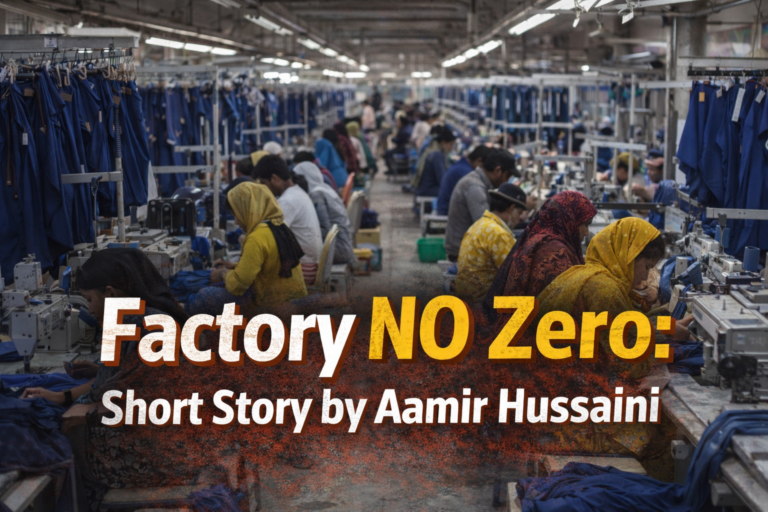
Yet the spectacular growth of this economic model rests on a labor regime that starkly contradicts the rhetoric of free markets. At its core lies the Gulf’s kafala sponsorship system, through which migrant workers are tied directly to their employers. Companies sponsor foreign laborers—primarily from South Asia—while maintaining extensive control over their mobility and employment. Passports are often confiscated, workers are burdened with heavy recruitment debts, and laborers frequently find themselves confined to company compounds or domestic service arrangements that limit their freedom.
This workforce now constitutes more than 80 percent of the UAE’s population, making it one of the most extreme examples of demographic imbalance in the modern world. Migrant workers endure difficult conditions, discrimination, and limited legal protections, yet continue to migrate in large numbers because their wages—however modest by Gulf standards—provide vital remittances for families in Pakistan, India, Bangladesh, and Nepal. Even in a country where trade unions are illegal, workers have repeatedly organized protests and strikes, occasionally triggering police raids and deportations.
The kafala system represents a glaring contradiction in the UAE’s global image as a modern and progressive society. To manage international criticism, the government has introduced partial labor reforms and established institutions such as the highly publicized “Ministry of Tolerance and Coexistence.” In practice, however, enforcement remains inconsistent, and structural inequalities within the labor system persist. Large cultural and educational projects illustrate this contradiction. On Saadiyat Island, marketed as a global center of culture and happiness, limited improvements in labor oversight allowed prestigious Western institutions—including New York University, the Guggenheim, and the Louvre—to establish branches, even as concerns about passport confiscation and recruitment debt continued to surface.
Alongside its labor regime, the UAE has also developed a reputation as a financial crossroads for the shadow economies of globalization. The country’s construction boom, real estate speculation, and lightly regulated financial environment have made it attractive to actors seeking discretion and regulatory flexibility. Cryptocurrency entrepreneurs, oligarchs from the post-Soviet world, precious-metal traders from conflict regions, and a wide spectrum of politically connected investors have all used the UAE as a financial refuge.
In some cases, members of the Emirati elite themselves have been linked to this financial ecosystem. Sheikh Tahnoon bin Zayed Al Nahyan, the national security adviser and brother of President MBZ, oversees an extensive network of investment funds and intelligence operations that blur the lines between state security, finance, and geopolitics. Reports have linked his activities to ventures ranging from global technology investments to controversial surveillance operations targeting dissidents.
As with labor policy, the Emirati state has sought to manage international scrutiny through selective reforms. Under pressure from Western governments, authorities have occasionally taken action against specific networks—such as al-Qaeda financial channels in the early 2000s or sanctions-related activity linked to Iran in the 2010s. Yet systemic reform has remained limited. When the Financial Action Task Force (FATF) placed the UAE on its “gray list” in 2022 due to concerns over money laundering and financial transparency, Western governments ultimately supported its removal from the list only two years later.
The episode underscores a deeper reality of the global political economy. The UAE’s role as a financial gateway—facilitating flows of capital that range from legitimate investment to illicit wealth—has become too deeply embedded within global markets to be fundamentally challenged. Like the kafala system that underpins its labor supply, the Emirates’ position within the shadow circuits of global finance reveals how contemporary capitalism continues to rely on legal gray zones, disciplined labor, and geopolitical alliances to sustain its rapid accumulation of wealth.
Facilitating Global Militarism: The Security Pillar of Coercive Capitalism
If the UAE’s economic model reveals the labor and financial foundations of coercive capitalism, its military role exposes the system’s geopolitical dimension. The violent escalation that followed the U.S.–Israeli strikes on Iran on February 28, 2026 demonstrated how deeply the Gulf monarchies are embedded within the global architecture of American military power. Iran’s retaliatory missile and drone attacks did not target Israel alone; they extended across a network of U.S.-aligned military and logistical hubs throughout the region—including Iraq, Kuwait, Bahrain, Qatar, Saudi Arabia, and the United Arab Emirates.
The UAE, designated by Washington as a major defense partner, became a critical node in this confrontation. Emirati air-defense systems reportedly intercepted hundreds of incoming missiles and drones, while falling debris disrupted key economic sites such as Dubai International Airport, Jebel Ali Port, and luxury developments including Palm Jumeirah and the Burj Al Arab. These events underscored a central reality: the security of Gulf financial hubs is inseparable from their role in sustaining a broader militarized geopolitical order.
This relationship between American militarism and Gulf monarchies did not emerge overnight. Since the early decades following independence in 1971, the UAE has pursued a deliberate strategy of aligning itself with the U.S. military-industrial complex. Facing regional insecurity and limited domestic military capacity, Emirati leaders sought protection by transforming their state into a key logistical and strategic partner for Western military operations. The turning point came during the 1990 Gulf crisis, when Saddam Hussein’s threats against the Gulf monarchies accelerated the UAE’s integration into American defense networks.
Over the following decades, the UAE granted extensive access to its territory and resources. Al Dhafra Air Base in Abu Dhabi became a permanent hub for U.S. Air Force operations, hosting thousands of American personnel and advanced surveillance aircraft. Jebel Ali Port in Dubai emerged as the U.S. Navy’s busiest overseas port of call, serving as a logistical backbone for naval operations across the Middle East and Indian Ocean.
Parallel to this logistical integration, the Emirati leadership invested heavily in advanced weaponry. The UAE financed the development of Lockheed Martin’s F-16 Block 60 fighter jets and spent tens of billions of dollars on American and European military equipment, including Reaper drones, Black Hawk helicopters, Patriot missile systems, and THAAD air-defense technology. These systems now form the backbone of the country’s layered defense network.
Emirati forces also accumulated operational experience through participation in Western-led military campaigns. UAE troops and pilots operated alongside U.S. and NATO forces during the Gulf War (1990–91), Somalia interventions (1993–95), Kosovo operations (1999–2001), and the long war in Afghanistan (2001–2021). These deployments helped cultivate close relationships with Western military institutions while projecting an image of the UAE as a disciplined and dependable partner.
This image was carefully cultivated by Mohamed bin Zayed Al Nahyan (MBZ), the central architect of the Emirates’ militarized transformation. A graduate of Britain’s Royal Military Academy Sandhurst, MBZ has effectively overseen Emirati defense strategy since the early 1990s. Under his leadership, the country built its armed forces in close partnership with Western militaries and private defense contractors. Retired American and European officers were recruited as advisers, elite Emirati units were trained by U.S. Marines, and the UAE invested heavily in developing a domestic defense industry.
MBZ’s approach has also involved collaboration with private military networks and security entrepreneurs operating on the margins of international regulation. Figures such as Erik Prince of Blackwater, contractors linked to Russia’s Wagner Group, and Latin American mercenary units have all reportedly operated within Emirati security projects. These relationships highlight how the UAE has integrated both state and private instruments of coercion into its broader geopolitical strategy.
The militarization of the state has not been confined to foreign policy. Domestically, MBZ has extended the logic of security governance into Emirati society itself. The introduction of mandatory military conscription in 2014 signaled a shift toward a more centralized national security culture, reinforcing loyalty to the state while expanding the military’s role in shaping national identity.
Taken together, these developments reveal the UAE’s function as more than a wealthy commercial hub. It operates as a strategic security pillar within the wider U.S.–Israeli–Gulf alliance, linking global capital flows with the projection of military power. The same infrastructure that facilitates trade, logistics, and finance also sustains a regional order in which Western military dominance and Gulf authoritarian stability reinforce one another.
In this sense, the UAE represents the geopolitical face of coercive capitalism: a state where economic globalization, authoritarian governance, and militarized alliances converge to sustain both wealth accumulation and strategic influence.
The Business of War: Autocracy, Geopolitics, and Profitable Insecurity
By the 2010s, the consolidation of the UAE’s militarized state under Mohamed bin Zayed (MBZ) enabled the Emirati leadership to pursue its strategic worldview far more assertively. This outlook combines a commitment to authoritarian stability with deep hostility toward political forces that might challenge dynastic rule. Chief among these perceived threats are forms of political Islam, whether represented by movements like the Muslim Brotherhood or by the revolutionary state ideology associated with Iran. At the same time, the Emirati leadership views democratic uprisings and popular political mobilization with equal suspicion, seeing them as unpredictable forces that could destabilize the carefully managed structures of Gulf monarchy.
For the Emirati ruling elite, this hostility is not merely ideological but existential. Participatory politics could empower constituencies demanding economic redistribution, political accountability, or resource sovereignty, all of which would undermine the concentrated power of hereditary rule. Yet this perspective aligns closely with the strategic interests of Western powers in the region. Despite the language of democracy that often shapes Western diplomacy, policymakers in Washington and European capitals have long recognized that authoritarian allies are far more predictable partners in safeguarding energy flows, maintaining regional security architectures, and advancing the normalization of relations with Israel.
The convergence of these interests became particularly evident during the aftermath of the Arab Spring. When MBZ moved decisively against the Emirati branch of the Muslim Brotherhood, Al Islah, culminating in the mass trial and imprisonment of ninety-four Emirati activists, Western governments responded with little more than muted criticism. Similarly, the Gulf monarchies’ intervention in Bahrain to suppress mass protests and their support for the military overthrow of Egypt’s democratically elected Muslim Brotherhood government in 2013 were met with limited resistance from Western capitals.
In the years that followed, the UAE expanded its regional military footprint. Emirati forces and proxies became deeply involved in conflicts stretching from Libya and Yemen to Sudan, shaping the trajectory of regional wars through military deployments, financial backing, and political mediation. At the same time, the UAE’s financial networks continued to operate across geopolitical boundaries—facilitating capital flows that sometimes undermined Western sanctions regimes while maintaining close defense and security ties with the United States.
These contradictions reveal a deeper dynamic of contemporary global capitalism. Although analysts often frame international politics as a competition between rival geopolitical blocs, the economic networks that underpin coercive capitalism frequently transcend such divisions. Financial hubs like Dubai operate simultaneously as gateways for global investment, discreet refuges for politically connected wealth, and logistical platforms within Western security systems. In this environment, the boundaries between national interests and private accumulation often blur.
The result is a political economy in which conflict and insecurity themselves become profitable. Military alliances generate vast arms purchases and security contracts, while regional instability reinforces the strategic value of states positioned as indispensable partners in maintaining order. As long as these dynamics persist, the Emirates’ military fortunes will remain closely linked to the broader American security apparatus that dominates the region.
The recent missile exchanges across the Middle East illustrate this reality. Advanced American missile defense systems stationed in the Gulf—rather than alternative technologies from rival powers—continue to form the backbone of regional air defense networks. Once hostilities subside, the cycle will likely repeat itself: military stockpiles replenished, defense agreements renewed, and new security threats identified.
Within this system, the greatest long-term challenge is unlikely to come from rival states alone. Movements advocating representative government, economic justice, and genuine political participation pose a more fundamental question to the architecture of the U.S.–Israeli–Gulf alliance. Such demands challenge not only the authoritarian stability of Gulf monarchies but also the economic and geopolitical arrangements that have long sustained the region’s model of coercive capitalism.
About the Author