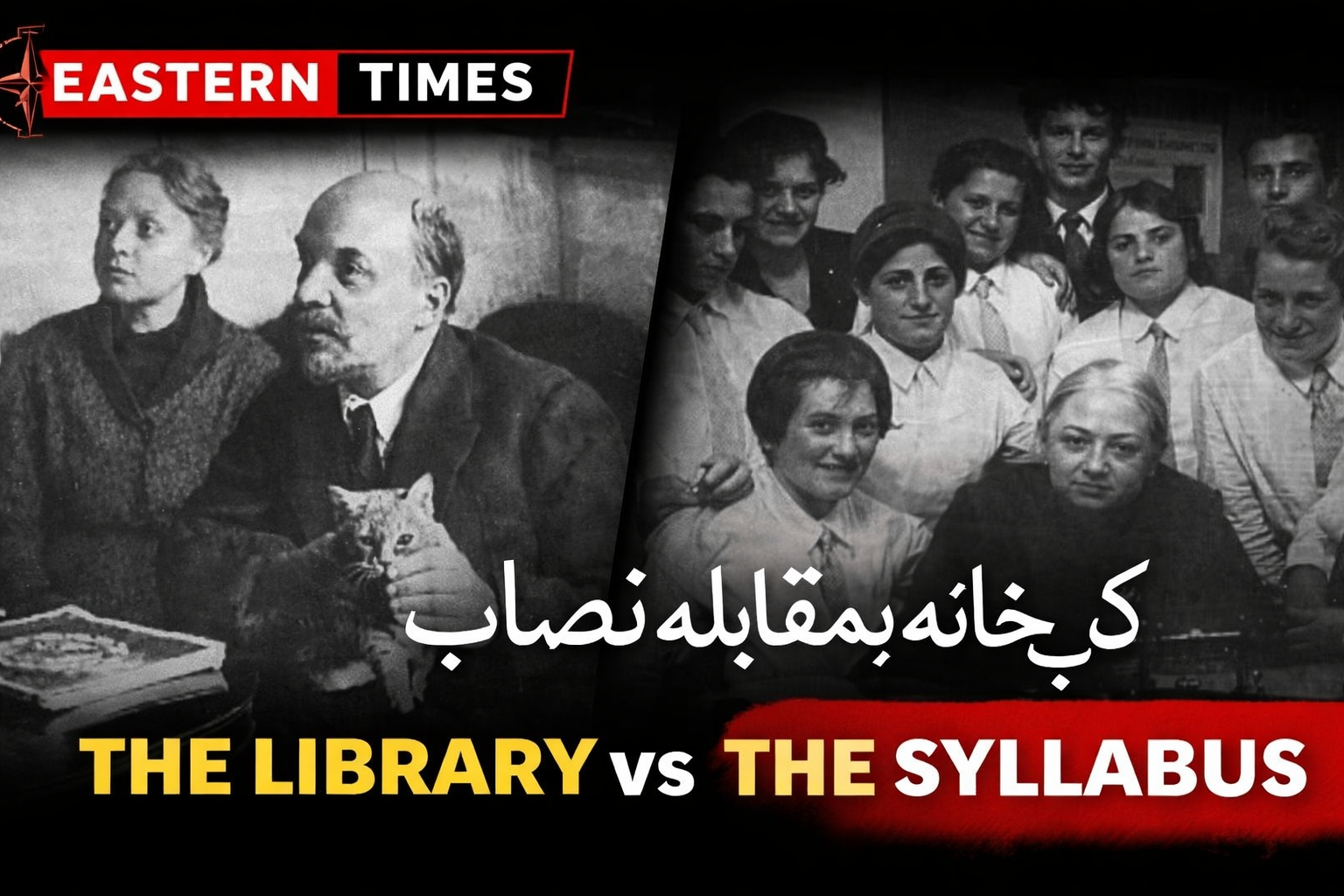
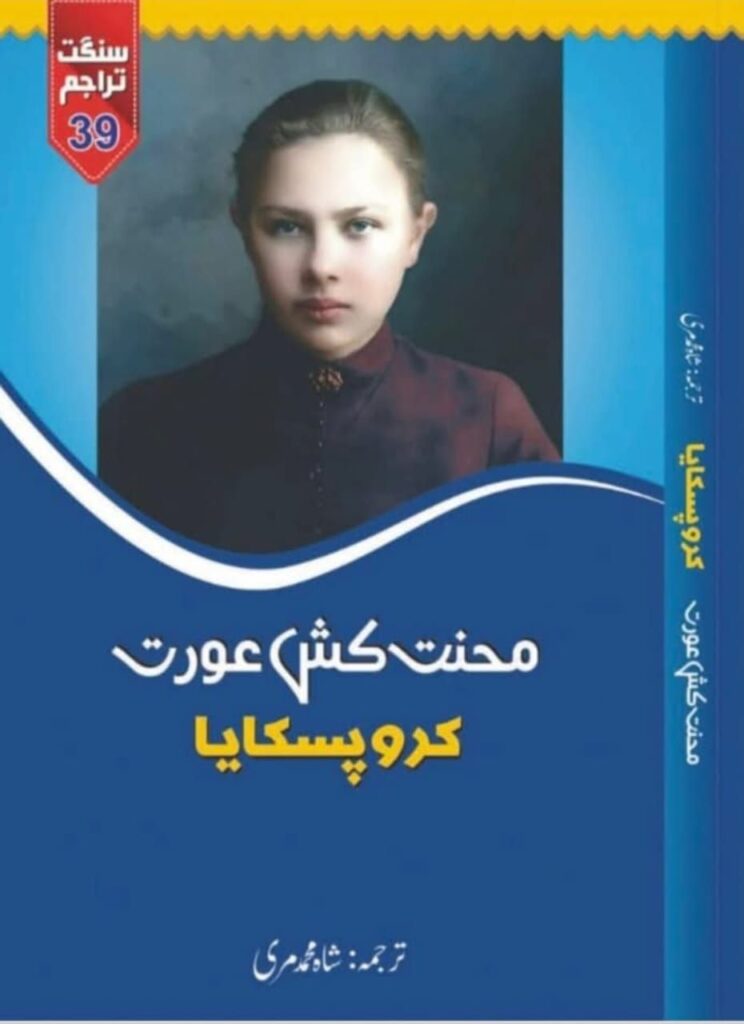
The great Bolshevik revolutionary Nadezhda Krupskaya was born February 26, 1869. She died February 27, 1939.. Shah Mohammad Marri M
آج 27 فروری کے دن سوویت یونین کی انقلابی خاتون نادیژدا کروپسکایا کا جنم دن ہے۔ اس مناسبت سے یہ سیاہ حاشیہ ان کے نام ہے۔ عامر حسینی
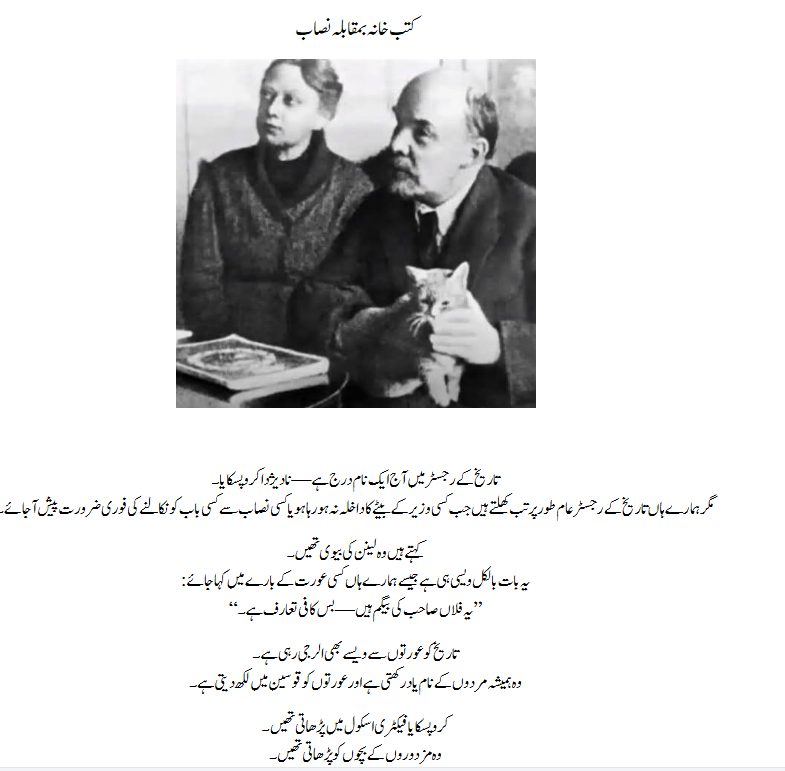
The Library vs The Syllabus
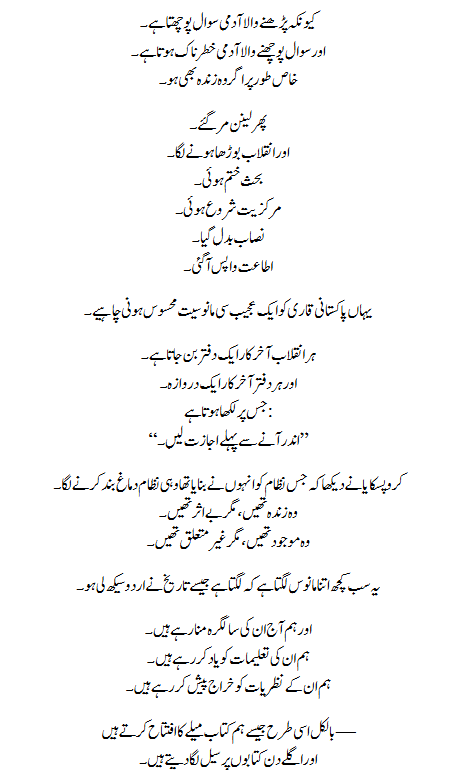
Today, history remembers a name — Nadezhda Krupskaya.
But in our part of the world, history books are usually opened only when a minister’s son cannot get admission somewhere, or when a chapter urgently needs to be removed from the syllabus.
They say she was Lenin’s wife.
Which sounds very familiar — the kind of introduction reserved for women here:
“She is the wife of so-and-so. That should be enough.”
History has always had an allergy to women.
It remembers men by name and places women in brackets.
Krupskaya taught at a factory school.
She taught workers’ children.
She believed revolutions do not begin by overthrowing governments — they begin by opening minds.
If such a sentence ever entered a Pakistani textbook, a committee would immediately be formed.
The committee would form a sub-committee.
The sub-committee would produce a report.
And the report would be sealed “in the national interest.”
Because here, open minds are considered a national security risk.
She wrote letters.
In secret codes.
She smuggled books.
She smuggled ideas.
Books are smuggled here too.
The only difference is that there they crossed borders — here they disappear from syllabi.
A book is always across a border.
Either a geographic border,
Or a mental one.
Then the revolution came.
The old state collapsed.
A new one emerged.
And Krupskaya was asked to help build the education system.
This was the moment when a teacher was given the authority to design a system.
The Pakistani reader may pause here.
Take a deep breath.
And continue reading.
Because this is usually where the laughter begins.
She believed children should learn science not only from books but from machines in factories.
That history must connect with present struggles.
That the wall between mental and manual labour must be broken.
Had this been proposed here, the guardians of education would have declared:
“This will corrupt the children.”
Our children are taught only two things:
Obedience and examinations.
Knowledge dies somewhere in between.
She wanted libraries to become public spaces.
Open shelves.
Mobile libraries.
Adult literacy.
She called librarians soldiers in the war against ignorance.
Here, libraries are often considered ideal wedding halls.
Books are kept locked away — in case someone reads them.
Because a person who reads asks questions.
And a person who asks questions is dangerous.
Especially if they are still alive.
Then Lenin died.
The revolution grew old.
Debate ended.
Centralisation began.
The curriculum changed.
Obedience returned.
The Pakistani reader may feel an eerie familiarity here.
Every revolution eventually becomes an office.
And every office becomes a door.
With a sign that reads:
“Permission required before entry.”
Krupskaya watched the system she helped build begin to close minds.
She was alive — but irrelevant.
Present — but powerless.
It feels so familiar that one suspects history has learned Urdu.
And today we celebrate her birthday.
We honour her ideas.
We pay tribute to her vision.
In the same way we inaugurate book fairs —
And put the books on sale the next day.
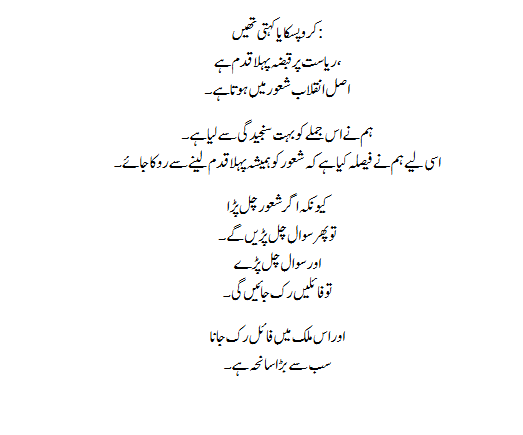
Krupskaya believed:
Seizing the state is only the first step.
The real revolution happens in consciousness.
We took this lesson very seriously.
Which is why we ensure consciousness never takes the first step.
Because if consciousness begins to move,
Questions will follow.
And if questions begin to move,
Files will stop moving.
And in this country,
Nothing is more dangerous than a file that stops moving.
About the Author