JUI-F Leader Linked to Violent Karachi Land Grab Row
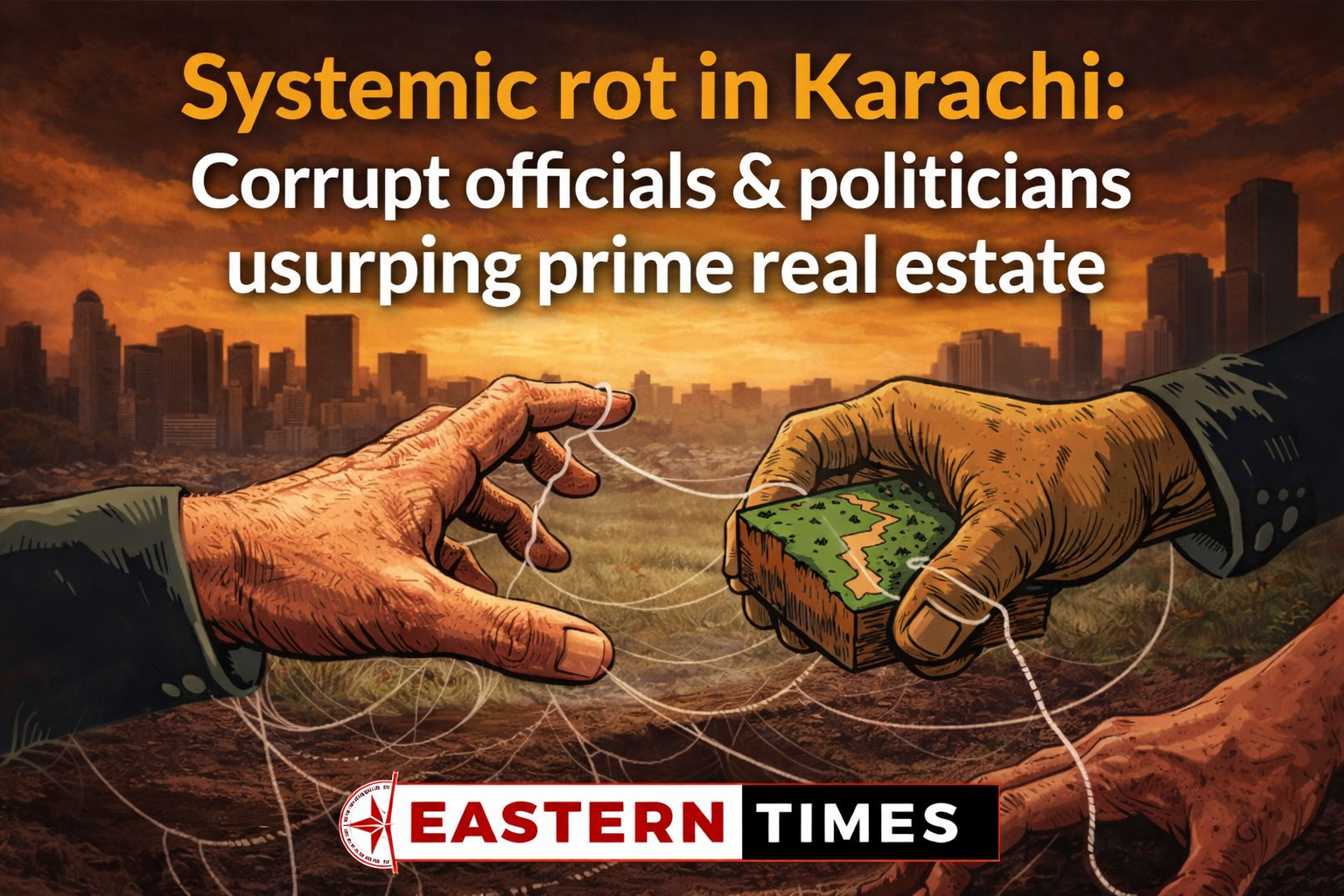
A major investigation by Dawn has exposed what appears to be a deeply entrenched system of government land grabbing in Sindh, operating beyond legal constraints and institutional oversight. According to the report, prime public land in Karachi is allegedly being captured through political patronage, manipulation of law enforcement, and the strategic use of criminal cases.
The investigation opens with a violent confrontation on Mai Kolachi Road near the US Consulate in Karachi — one of the city’s most valuable real estate corridors. On February 25 last year, around 4:30pm, two groups clashed over a three-acre parcel of state land. While the precise details of the altercation remain unclear, the dispute reportedly centred on ownership and control of this prime property.
At the centre of the controversy is a local leader of Jamiat Ulema-e-Islam (F) (JUI-F), 32-year-old Jibrail Khan. He had been hired as a site supervisor by one of the co-owners, builder Javed Iqbal. Multiple sources cited in the report claim that the land is highly coveted by powerful individuals at the top tiers of Sindh’s political structure.
Multiple FIRs and Allegations of Abuse of Power
Following the clash, an FIR was lodged against Jibrail Khan on serious charges including rioting with a deadly weapon, kidnapping, and attempted murder. However, the case did not stop there. Additional FIRs were reportedly filed against him across Karachi and other parts of Sindh — including Shikarpur, Moro, Qazi Ahmed, and Nawabshah — accusing him of crimes allegedly committed within weeks of each other, ranging from cattle theft to motorbike theft.
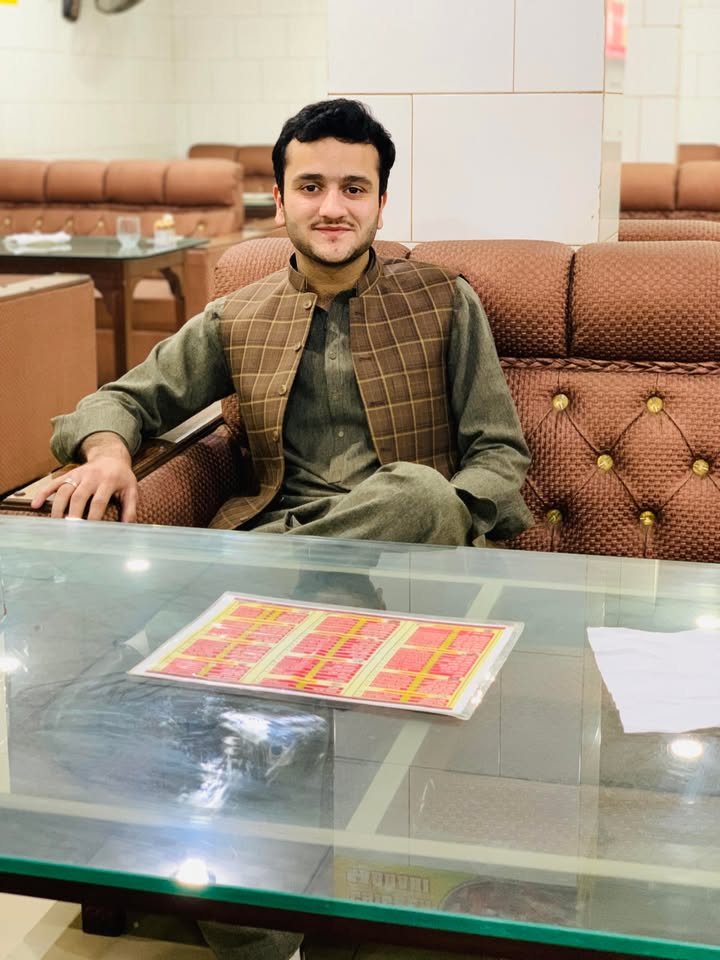
He was arrested and transferred between prisons despite later being acquitted by a court in Shaheed Benazirabad, where a judicial magistrate observed that there had been an abuse of power and that he had been falsely implicated. Despite the acquittal, his detention reportedly continued.
The plot’s co-owner, Javed Iqbal, also alleges that he was targeted. According to him, a fabricated FIR was registered and he was detained by the Counter Terrorism Department for four days. He claims he was pressured to surrender the land in writing. Ultimately, he secured relief from the Sindh High Court.
Rashid Mehmood Soomro Steps In
The dispute soon escalated politically. Rashid Mehmood Soomro, Secretary General of JUI-F Sindh, publicly defended Jibrail Khan, describing the land dispute as a battle between “two big crocodiles” rushing to grab the plot. He warned that powerful actors believed they could use brute force to dominate land in Sindh and cautioned that failure to resolve the issue could ignite unrest across the province.
Karachi Real Estate: The “Gift That Keeps on Giving”
According to sources within political, bureaucratic, and civil society circles cited by Dawn, Karachi has allegedly been informally divided into zones. Each zone is said to be overseen by trusted intermediaries responsible for managing land transactions and revenue flows. Among those allegedly involved are influential professionals, senior civil servants, and business groups believed to manage provincial “earnings.”
Given the stature of individuals allegedly implicated, most sources declined to speak on the record. However, Dawn reports that documentary evidence and ground reporting support the broader claims. Some names were reportedly changed to protect identities amid concerns that legal mechanisms are increasingly being used to silence media scrutiny.
A System Beyond Institutional Guardrails
The Mai Kolachi Road incident, according to observers, is merely the tip of the iceberg. The broader picture that emerges is of a system allegedly operating free from the constraints of law, answerable only to political masters and driven by the pursuit of enormous financial gain.
Karachi’s high-value real estate — especially state-owned land — appears to be at the centre of this alleged nexus of political power, law enforcement pressure, and financial profiteering.
As the investigation suggests, connecting the dots may be left to readers — but the implications for governance, rule of law, and public accountability in Sindh are profound.
About the Author