
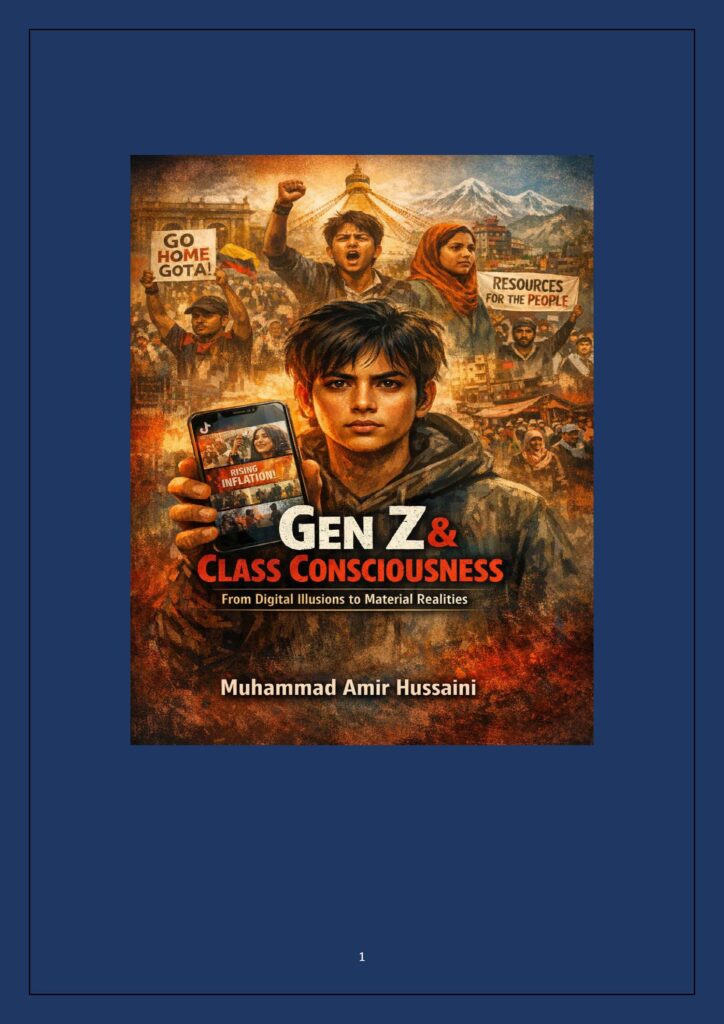
From Digital Illusions to Materia Realitie- Muhammad Aamir Hussaini
Foreword
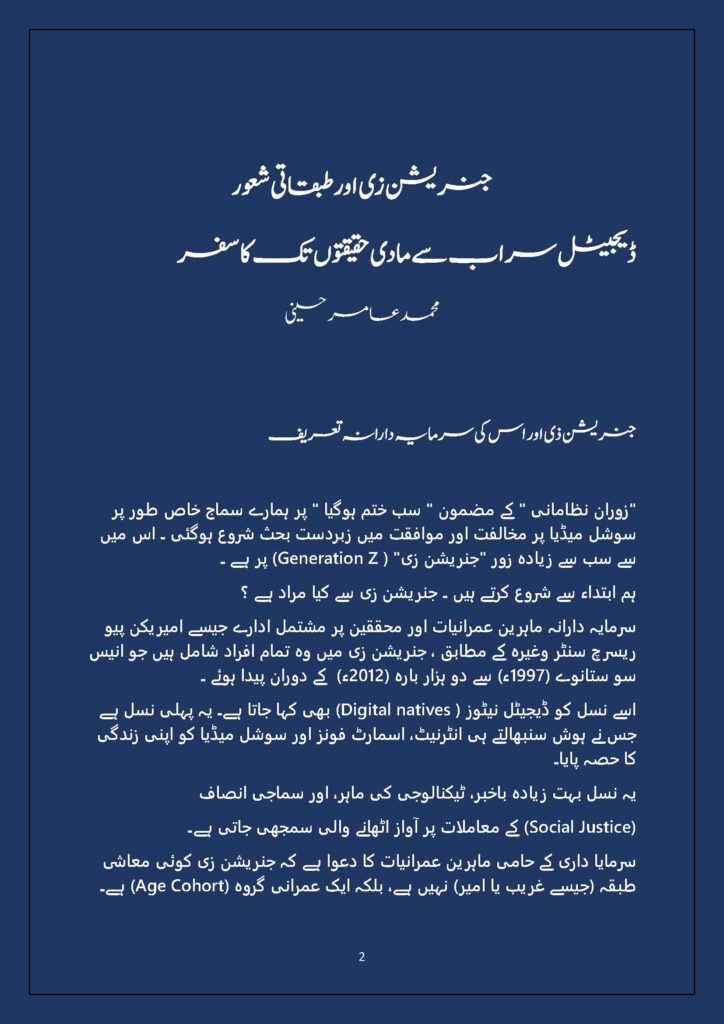
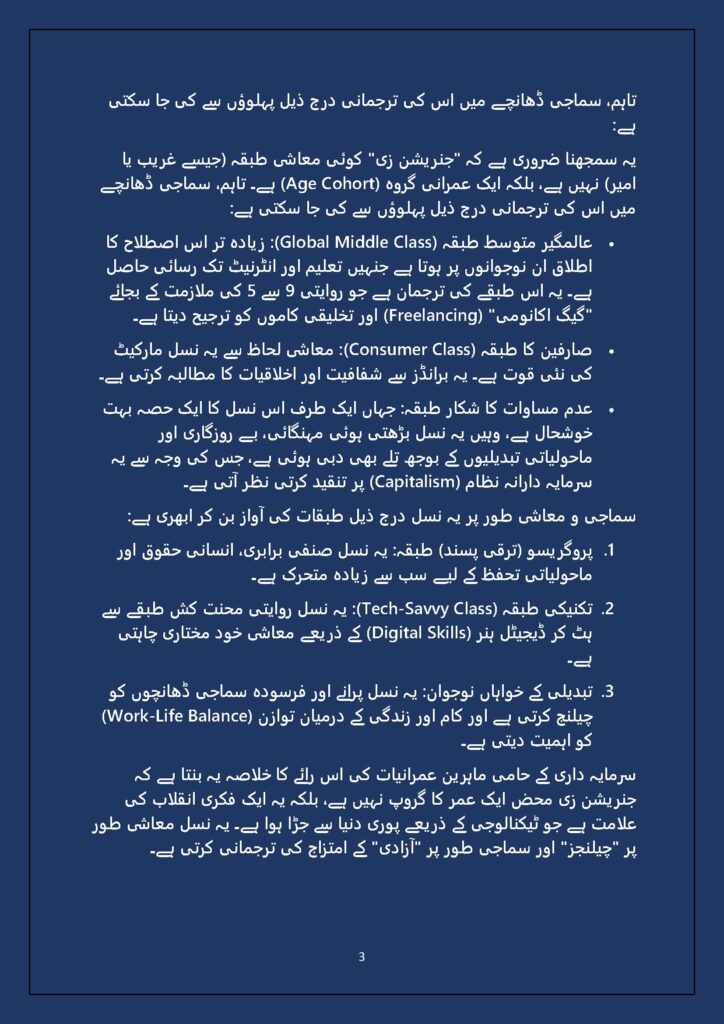
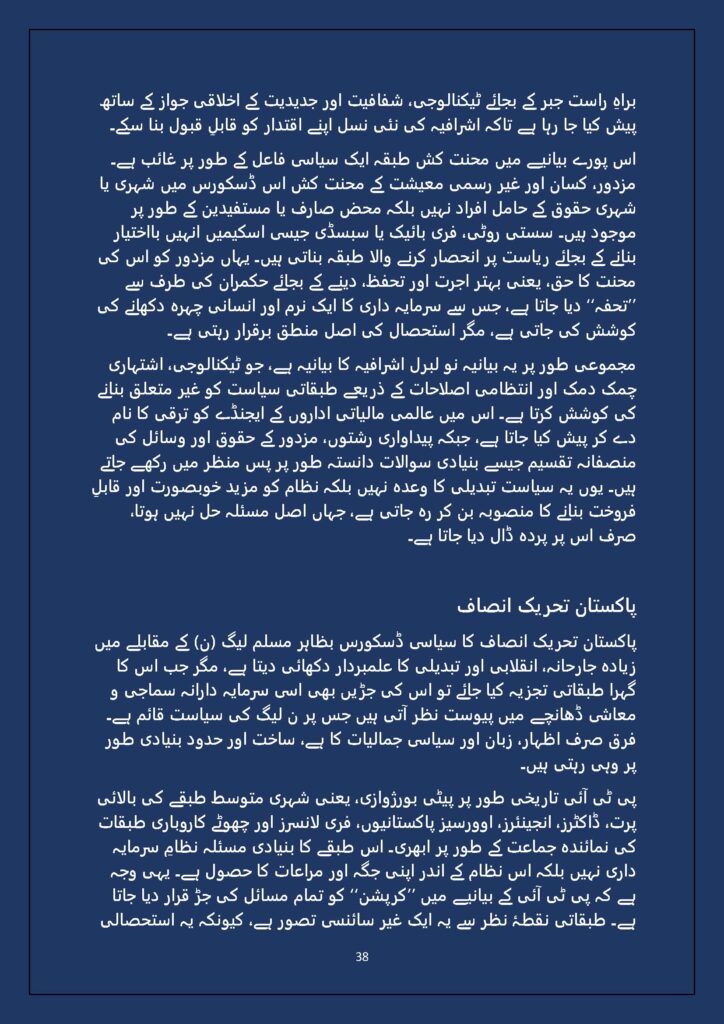
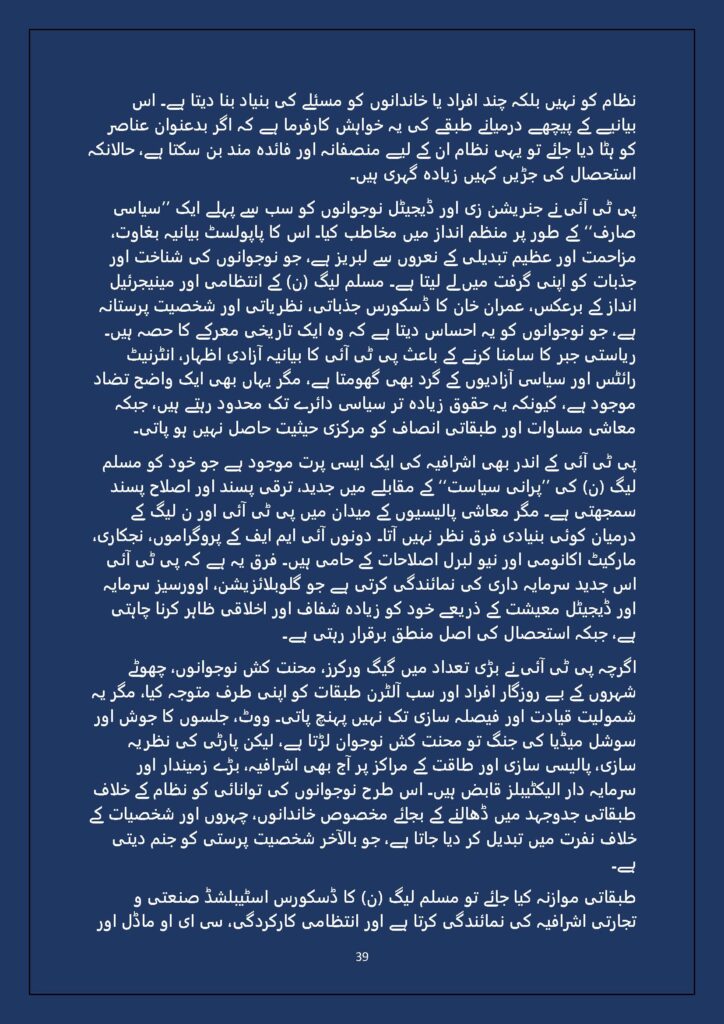
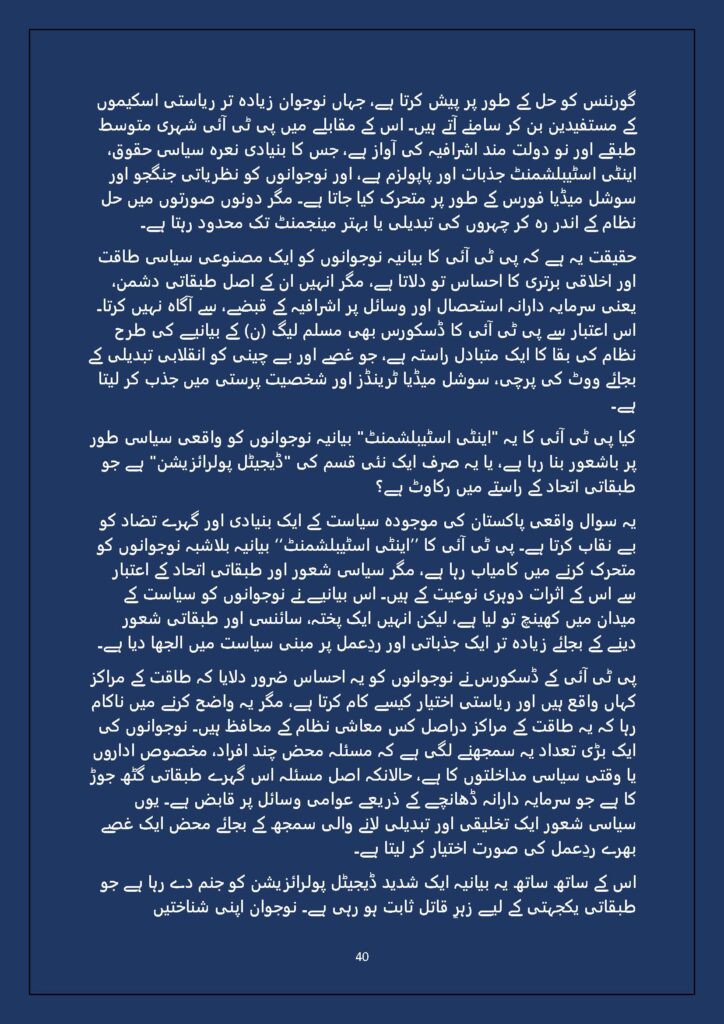
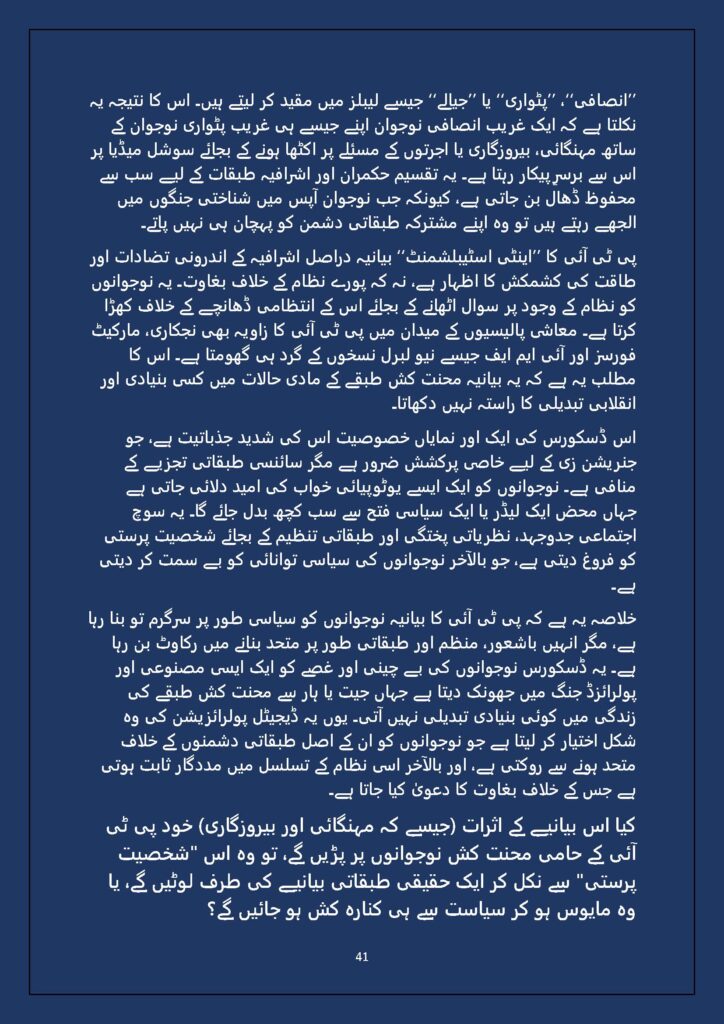
In recent years, Generation Z has been celebrated as a disruptive, digital, and politically awakened cohort—often portrayed as a homogeneous force destined to reshape society through technology, creativity, and moral clarity. Yet this celebratory narrative conceals more than it reveals. It obscures the most decisive fault line of our time: class. This study, Gen Z and Class Consciousness: From Digital Illusions to Material Realities, intervenes precisely at this point of concealment.
The central argument of this work is both simple and unsettling: Generation Z is not a class. It is an age cohort fractured by deep material inequalities. A university-educated influencer discussing “the freedom of the gig economy” and a delivery rider navigating scorching streets under algorithmic surveillance may share the same year of birth, but they inhabit fundamentally different social worlds. To collapse these experiences into a single generational identity is not an analytical error alone—it is a political act.
This book challenges the dominant frameworks of capitalist sociology and digital liberalism that replace class analysis with generational branding. By foregrounding age instead of relations of production, contemporary discourse transforms structural exploitation into lifestyle difference and political struggle into cultural disagreement. “Boomers versus Gen Z,” “old politics versus new politics,” and “digital natives versus analog minds” become convenient narratives that divert attention from ownership, labor, surplus extraction, and power.
A key contribution of this work lies in its interrogation of the gig economy—often celebrated as flexible, empowering, and post-industrial. Here, gig labor is exposed not as freedom but as a new modality of discipline: work without security, wages without rights, and control without visible masters. The algorithm replaces the foreman; ratings replace collective bargaining; isolation replaces solidarity. What appears decentralized is, in fact, hyper-centralized capital operating behind an invisible interface.
Equally significant is the book’s engagement with digital discourse and elite hegemony. While social media promises democratized expression, the power to shape narratives remains concentrated in the hands of the upper middle class—those with linguistic capital, technological access, and cultural legitimacy. Progressive language, ethical consumerism, and digital activism often circulate within elite loops, while working-class Gen Z is reduced to content, data, or labor—rarely to authorship or leadership.
Grounded in Pakistan’s political economy yet resonant across the Global South, this study situates Gen Z within ongoing material struggles—from gig workers and urban laborers to peripheral regions resisting dispossession. It asks urgent questions: Can emerging movements transcend identity fragmentation and evolve into class-based solidarity? Will digital visibility translate into material power? And can a generation move beyond algorithmic illusions toward collective political agency?
This is not a nostalgic return to old slogans, nor a rejection of new media. It is a call for analytical clarity and political honesty. Without class consciousness, generational politics risks becoming another tool of neoliberal containment. With it, however, the same generation holds the potential to articulate a new, grounded, and transformative politics.
This book is offered to students, researchers, activists, and all those who refuse to mistake visibility for power and trends for change. It invites readers to look past the glow of screens and ask the most difficult question of all: Who owns, who works, and who pays the price?




About the Author