Operation “Herof 2.0”: What the BLA Claims, What Pakistan Reports
By Muhammad Aamir Hussaini
On January 30, 2026, Balochistan Liberation Army – BLA , a Baloch nationalist separatist(Banned) militant organization made coordinated attacks on 12 places across the Baluchistan, Province of Pakistan. During these attack a large numbers of people including Pakistan’s security forces’s officials, civilians and attackers were killed.
According to Pakistn’s official sources total 21 were Pakistanis including 10 security officials and 11 innocent civilians were lost their lives and 67 attackers belonged to BLA were killed by Pakistani security forces.
BLA accepted the responsibility of the attacks and declared it part of “Operation Herof 2.0” and claimed that it killed the 84 Pakistani security officials.
The attacks began on the morning of Saturday, January 31, with explosions and gunfire between 5 and 6 a.m. in Quetta, the provincial capital of Balochistan, as well as in several other cities. Over the next two hours, clashes and further blasts continued at multiple locations. The situation across Balochistan grew extremely tense, with the province effectively turning into an “information black hole” as media and internet blackouts were enforced in several areas and communication links were severed.
Detailed account of the attacks (locations, nature, and losses)
Key attack sites and incidents:
The BLA attacks spread across at least 12 cities and areas of Balochistan. A summary of major locations and what happened there is as follows:
- Quetta (provincial capital):
Quetta was the starting point of the assault, where the first powerful blast was reported at around 6:00 a.m. Multiple incidents of firing and explosions occurred across the city. In the busy Hazarganji area, several banks were targeted with hand grenades and rocket attacks. In some places, amid the chaos, members of the public reportedly broke into banks and police stations and engaged in looting.
On Sariab Road, a police patrol vehicle was ambushed, set on fire, and at least two police personnel were killed. In the sensitive Red Zone, near the Chief Minister’s House, a suicide bomber detonated himself, killing DSP Faisal Yousafzai on the spot and injuring two other personnel.
Following these incidents, all major arteries of Quetta were sealed, entry and exit points were closed, key government buildings (including the Secretariat and courts) were shut down, and mobile internet services were suspended. The army, FC, and police began a joint operation; aerial surveillance by helicopter continued. Hospitals, including Bolan Medical Complex, imposed emergency measures and placed medical staff on high alert. - Gwadar:
In the coastal city of Gwadar, attackers targeted a workers’ residential colony. Officials said the camp housed a single family group originally from Khuzdar district. The attack killed 11 civilians—including 5 men, 3 women, and 3 children. Senior police officer Ata ur Rehman stated that the death toll was initially reported as five but was later confirmed as eleven. Security forces responded quickly and said they killed six attackers in Gwadar.
Near Gwadar, in the Pasni area, militants tried to ram an explosive-laden vehicle into the gate of a coastal Marine Security Agency camp as part of an attempted fidayeen-style attack. Security personnel stopped the vehicle with timely fire; in the ensuing clash, at least five attackers were killed. Separately, firing was also reported between attackers and security forces in Gwadar’s labor colony. - Nushki:
In Nushki district, attackers stormed the Deputy Commissioner’s residence and government offices. The BLA released a video on social media showing DC Nushki Muhammad Hussain Hazara and a female Assistant Commissioner allegedly in their custody; the DC is seen saying he is in BLA custody. Authorities initially did not confirm or deny the abduction, and the situation remained unclear due to a communications blackout across Nushki.
Militants also attempted an attack on an FC headquarters in Nushki, but security forces’ response reportedly forced them back, preventing major damage. - Mastung:
In Mastung, near Quetta, militants attacked the district jail. During heavy exchanges of fire, jail locks were broken and 27 prisoners escaped. Attackers also hit a police station in the city and seized weapons and ammunition stored there. After the jailbreak, police and FC launched search operations across Mastung and surrounding areas. In the Mach area, local administration announced instructions for residents to remain indoors and avoid unnecessary movement. Hospitals in Mastung also declared an emergency and treated the injured. - Kharan:
In southern Balochistan’s Kharan district, militants attacked the home of a local tribal figure, Mir Shahid Gul Malatzi. Indiscriminate firing killed seven people, including Mir Shahid, and the attackers also set his house and vehicle on fire. Mir Shahid Gul Malatzi headed a nationalist alliance in the district. The motive remains unclear, though it is suspected militants viewed him as a government supporter or informer. Reports of additional blasts and firing from other parts of Kharan were also received as part of the broader coordinated assault. - Kalat:
In Kalat, separatists attempted attacks on the Deputy Commissioner’s office and the nearby police lines. Police responded effectively, forcing the attackers to retreat after suffering heavy losses, and officials said the situation remained under control. However, while withdrawing, militants set fire to the record rooms of Kalat City and Sadar police stations, burning important documents. - Dalbandin (Chagai district):
Militants attempted an assault on an FC headquarters in Dalbandin; at least two explosions were heard. Forces responded immediately, cordoned off the area, and launched a search operation. Authorities said attackers failed to achieve their objective and the situation was brought under control quickly. - Turbat / Tump (Kech district):
In the Makran Division, coordinated attacks were also reported on security posts in the Tump area near Turbat and nearby Balecha. Militants fired from a distance and used hand grenades, but no major casualties were reported. FC and police retaliated, foiling the attacks and forcing the militants to flee. - Panjgur and other areas:
Smaller-scale incidents of firing and explosions were reported from some other parts of the province. In Panjgur, security forces responded in time and contained the situation. Authorities also instructed residents in parts of the Makran and Sibi divisions to remain indoors due to the threat of further attacks.
Overall situation
According to officials, the purpose of these coordinated attacks was to spread chaos across the province, but security forces brought most locations under control within a few hours. Police, the Pakistan Army, and the Frontier Corps carried out prompt actions in multiple cities, forcing militants back and killing several of them.
A senior provincial police official confirmed soon after the attacks that in various clashes 10 police personnel were killed, including one DSP, and 9 were injured. Meanwhile, six civilians were brought injured to hospitals in Quetta. Authorities said that overall 2–3 security personnel sustained minor injuries, and no major government installation was allowed to be seized.
After the main incidents, intermittent exchanges of fire continued in some areas, but by evening most locations had been cleared. In the provincial capital, tight security continued into the next day: the city remained largely shut, and search operations continued. By the evening of January 31, 2026, officials announced law-and-order was under control provincewide, though a high alert remained in several districts for days. In Quetta, on February 1, 2026, further raids were reported—some suspects were detained and four were reportedly killed. Provincial authorities urged the public not to believe rumors, not to panic, and to cooperate. A government spokesperson said operations against “enemies of peace” were ongoing and full details would be shared once finalized.
Baloch Liberation Army statement, aims, and claims
A few hours after the attacks, the banned Baloch Liberation Army claimed responsibility. A spokesperson described the actions as part of “Operation Herof 2.0,” claiming it consisted of simultaneous attacks across multiple cities. The group released social media statements and some videos, claiming that dozens of fighters—including women combatants—took part.
The group said its targets included military and paramilitary facilities, police stations, and senior government officials, and claimed it used gunfire and suicide attacks. It also claimed it blocked key highways, erected road obstacles in some areas, and tried to restrict security-force movement. In a statement, spokesperson Jiand Baloch said these actions represented a “new phase” of the fight for Balochistan’s “freedom,” intended to challenge what the group called Pakistan’s state control.
A video attributed to BLA commander Bashir Zeb Baloch also circulated, in which he allegedly claimed to have entered Balochistan to lead the front—though independent confirmation was not available. In an audio message, he appealed to Baloch men and women to come out and join what he called a “decisive national war of liberation.” The group also released footage of attackers, showing them fighting security forces on roads, and claimed to have destroyed government vehicles and installations.
The BLA presented the attacks as retaliation for what it described as state repression and recent security-force operations. It specifically referenced January 29 operations in Balochistan and claimed that dozens of its “comrades” were killed, arguing the attacks were necessary to “settle the account” for those losses.
Pakistani authorities rejected BLA claims as propaganda. In contrast to the group’s claim of 84 security personnel killed, officials confirmed 10 security personnel deaths in their reporting. Authorities also did not accept claims that militants had seized areas or taken officials hostage. For example, despite video circulating about the Nushki DC and AC, government representatives avoided confirming details and said more would be shared once the situation was clearer.
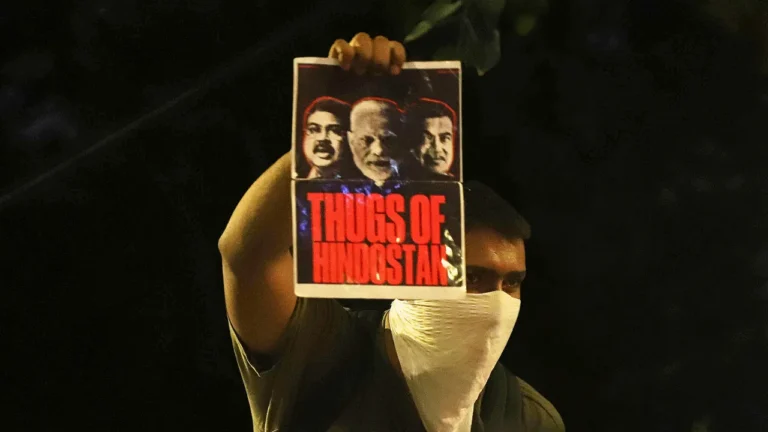
Overall, the BLA framed the attacks as a continuation of its long-running insurgency and declared it would continue until “freedom.” The Pakistani state, meanwhile, describes the BLA as a terrorist organization acting on the direction of an “enemy country” (India), attacking civilians and the state. The BLA’s stated political objective is to intensify Baloch nationalist sentiment and pressure the federal government over rights and resource control, while the state categorizes its actions as terrorism.
Pakistani government and security response
Immediately after the attacks, Pakistan’s government and armed forces issued strong condemnations. Federal Interior Minister Mohsin Naqvi described the attacks as a cowardly act of “Fitna-e-Hindustan” (Indian-backed mischief) and confirmed 10 security personnel were killed. He praised security forces for rapid action, claiming dozens of attackers were killed and the assaults were thwarted.
Prime Minister Shehbaz Sharif also attributed the attackers to Indian support and praised the security forces. He said terrorists attacked 12 locations in Balochistan, but the armed forces foiled them, and vowed the counterterrorism campaign would continue until terrorism was eliminated. He paid tribute to the fallen personnel and again suggested a neighboring state’s backing of separatists.
Balochistan Chief Minister Mir Sarfraz Bugti described the attacks as reflecting a defeated mindset and said they would not weaken the state’s resolve. He praised the forces and claimed that over the past 12 months more than 700 militants had been killed in Balochistan, and that around 70 were killed in just two days. He said the state would not rest until the “last terrorist” was eliminated and government writ was enforced.
The military’s media wing, ISPR, issued a statement on the evening of January 31 saying all attacks had been repelled and clearance operations were ongoing. It also highlighted that one day earlier (January 29) the army had carried out intelligence-based operations in Harnai and Panjgur, claiming a total of 41 militants were killed—30 linked to the banned Pakistani Taliban (which the military refers to as “Fitna-e-Khawarij”) and 11 linked to the BLA (referred to as “Fitna-e-Hindustan”). The statement said weapons, explosives, and money looted in a December 15, 2025 bank robbery in Panjgur were recovered. Officials argued the BLA’s multi-pronged attacks were retaliation for those “successful” operations and an attempt to restore declining credibility.
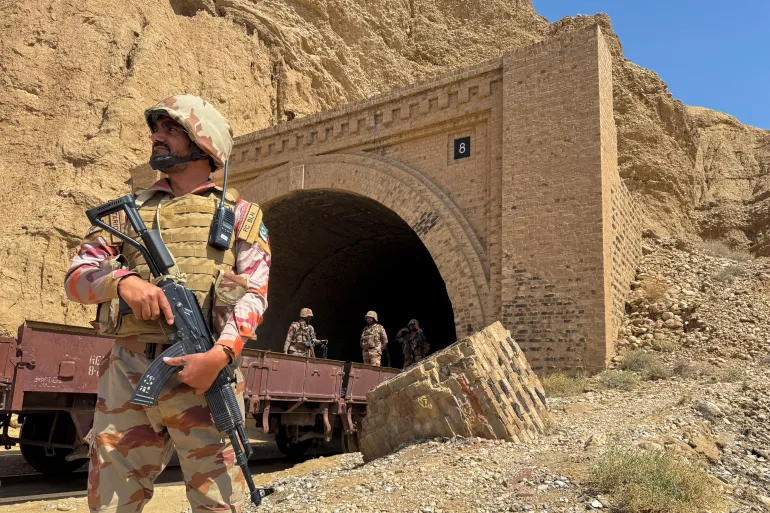
During and after the attacks, provincial authorities took emergency measures to restore order. In Quetta and other sensitive districts, conditions resembled a curfew: checkpoints were established at key entry points, searches began, and mobile phone and internet services were suspended to disrupt coordination. Mobile data was reportedly fully shut in and around Quetta, Sibi, Chaman, and nearby areas. Pakistan Railways temporarily suspended train services in Balochistan, and multiple trains—including the Jaffar Express—were halted before reaching destinations. Hospitals declared emergencies and called in staff; Provincial Health Minister Bakht Muhammad Kakar reportedly visited hospitals to monitor care. Helicopters from the Pakistan Air Force and army aviation were tasked with monitoring key installations and highways. Some officials also indicated the possibility of air strikes, though ground operations remained primary because attackers had entered populated areas.
Government officials claimed many attackers were young men “used” by leaders based abroad. Security sources named alleged leadership figures—Bashir Zeb Baloch, Harbiyar Marri, and Dr. Allah Nazar—claiming they plan operations from safe havens in Afghanistan and elsewhere, while recruiting local youth. Authorities also argued that attacks on civilians—such as the killing of a workers’ family in Gwadar and the looting incidents—demonstrated “criminal intent” and showed militants did not represent public welfare. Security forces announced they would intensify intelligence-based operations and dismantle militant networks and facilitators.
Historical and political background
These attacks did not emerge in a vacuum; they are part of Balochistan’s decades-long separatist conflict. Balochistan is Pakistan’s largest province by area but among the least developed, bordering Afghanistan and Iran. The province has major natural resources (including gas, coal, gold, and copper), but Baloch nationalists argue the federal state has historically exploited these resources while depriving locals of development and rights. Many districts face severe deficits in education, healthcare, employment, and infrastructure compared to other parts of the country. This sense of deprivation has periodically fueled armed resistance.
The current wave of separatist insurgency is often traced to the early 2000s, intensifying after veteran Baloch leader Nawab Akbar Bugti was killed in a military operation in August 2006. After that, insurgent violence expanded. Groups such as the BLA and others organized more systematically and carried out armed actions seeking separation or far-reaching autonomy.
The BLA has emerged as one of the most prominent groups. Pakistan has declared it banned, and the United States has also designated it as a terrorist organization. Initially, such groups mostly targeted security forces and state installations, but in recent years attacks have expanded to include non-local civilians—especially Punjabi laborers—and Chinese nationals and projects. Observers argue this is intended to send a message that “outsiders” are unsafe in Balochistan, discouraging federal initiatives and international investment. The BLA has previously claimed responsibility for attacks linked to Chinese interests, including an attack on the Chinese consulate in Gwadar, a suicide attack on Chinese nationals in Karachi, and multiple assaults on CPEC-related projects.
In recent years, the scale of attacks appears to have increased. In August 2024, separatists carried out multiple major attacks across Balochistan in a single day, killing dozens of security personnel and civilians; they reportedly destroyed bridges, seized hotels, and fought protracted engagements. In May 2025, a passenger train near Mach was attacked and hundreds of passengers were reportedly held hostage, leading to a two-day siege and dozens of deaths. Such incidents suggest insurgents have expanded operational capability and geographic reach. Analyst Muhammad Amir Rana argues that the distinctive feature of the January 30–31 attacks is their simultaneous provincewide execution and the temporary blocking of major highways (including routes like the Quetta–Karachi highway and the Quetta–Taftan corridor), demonstrating both confidence and the ability to push conflict toward borders with other provinces.
Pakistan’s state narrative frames violence in Balochistan as part of a proxy war backed by India. Officials accuse India’s intelligence agency Research and Analysis Wing (“RAW”) of funding and assisting separatists to destabilize Pakistan internally—an allegation India denies, calling it an attempt to cover Pakistan’s internal failures. Some separatist leaders have publicly appealed for Indian diplomatic support, and at times attacks have been symbolically aligned with dates like India’s Republic Day or Pakistan’s Independence Day to attract attention and sympathy. For instance, a BLA attack occurred on January 26, 2022, in Lasbela, and there were major actions on August 14, 2023—each side attaching its own meaning to these timings.
Overall, the Balochistan conflict is not only a security issue but also a deeply political and economic one, shaped by distrust between the center and the province, allegations of unfair resource distribution, enforced disappearances, and human-rights abuses. The January 30–31 attacks are another chapter in a prolonged struggle: insurgents remain capable of coordinated lethal operations, while the state remains determined to crush them.
Media coverage comparison and analysis
Coverage of the January 30–31 attacks differed across Pakistani and international outlets. Urdu and domestic media largely emphasized the official narrative, while international outlets tended to report with more context and background.
- State-aligned and Urdu domestic media:
State TV and pro-government channels/newspapers emphasized that the attacks were “foiled,” highlighting high militant death claims and strong condemnation. PTV and some outlets ran headlines focusing on “attacks defeated, dozens of terrorists killed.” Dunya News used highly charged labels like “Fitna-e-Hindustan terrorists” and emphasized that forces thwarted “cowardly attacks” at 12 locations. Urdu outlets heavily highlighted the India angle, calling militants “Indian-backed,” and claimed Indian media and social media openly supported the BLA.
They prominently covered the killing of the workers’ family in Gwadar to illustrate brutality, while stressing that key installations remained protected. Many private channels repeated government-provided figures (e.g., “37 militants killed, 10 security personnel martyred”), while issues like internet shutdowns or the Nushki officials’ reported abduction were initially less visible. Some local journalists criticized mainstream silence and the lack of timely, accurate information. Journalist Shahzeb Jillani noted on social media that Balochistan had become an “information black hole,” with militants spreading videos and sweeping claims while the government released selective numbers to project control. - English-language Pakistani media:
Outlets such as Dawn, The News International, and Geo News English generally reported in a more restrained tone, often relying on international wire copy (Reuters/AP/AFP). Their language tended to be less emotive, using terms like “militants” or “separatists,” and sometimes avoiding the word “terrorist” to maintain a neutral news style. They more often included the fact that the BLA claimed responsibility and noted conflicting casualty claims. They also carried details such as civilian deaths in Gwadar, the Nushki episode, and the Mastung jailbreak—since these were present in wire reports—while still largely reflecting official versions where available. - International Urdu outlets:
BBC Urdu, Voice of America Urdu, and Independent Urdu provided both news and explanatory context. BBC Urdu published multiple items on January 31, including a straight news report citing government claims (attacks foiled; militants killed) and a more analytical piece discussing what it means that coordinated attacks reached the provincial capital and what it signals about insurgent capacity. - Global news agencies and international media:
Reuters reported that Pakistan said 67 militants were killed and explicitly placed side-by-side the BLA’s claim of 84 security personnel killed with official confirmation of 10 security personnel and 11 civilians killed. Associated Press carried the combined toll (10 security, 11 civilians) and noted officials’ claim that dozens of insurgents were killed. Agence France-Presse described the on-ground atmosphere (successive blasts, deserted streets, emergency response), and included claims around communication shutdowns and rail suspension. Al Jazeera highlighted the attacks and later ran an explainer on what was behind them, including analysis about the insurgents’ tactics and the targeting of non-local workers and strategic projects.
Bottom line: Pakistani Urdu/state-aligned media centered on “failure of the attacks,” force success, condemnation, and India allegations, while international and more independent outlets emphasized fuller incident detail, competing claims, and deeper context. Domestic media caution around “national security” and restrictions on information flow contributed to an environment where fuller details appeared later—and often first through international reporting—while militant content circulated on social platforms and was dismissed by authorities as propaganda.
Conclusion
The coordinated attacks across Balochistan on January 30–31, 2026 count among the most severe and wide-ranging incidents in the province’s recent history. Simultaneous strikes on multiple targets demonstrated that Baloch separatists remain capable of organized operations and continue to pose a significant challenge to the state.
The attacks caused major loss of life: security forces suffered casualties, and civilians—including women and children—were also killed. The Pakistani government, emphasizing that the assaults were thwarted, sought to project that state writ remains intact and that militants failed to achieve strategic gains. Federal and provincial authorities issued strong statements and warned that any attempt to destabilize Balochistan would be defeated.
The BLA framed the attacks as part of a “war of liberation,” but its tactics—especially violence affecting civilians and economic targets—have, for many observers, damaged its moral standing and legitimacy. The events underscore a grim cycle: major security operations kill militants; militants respond with large-scale attacks to demonstrate survival and capacity; and ordinary people in Balochistan pay the price through fear, shutdowns, and disrupted life.
These developments reinforce a long-standing reality: Balochistan’s conflict has not been resolved through force alone. Analysts argue that alongside security measures, a sustainable path requires political engagement, addressing deprivation and rights-based grievances, and building trust between the province and the center. Otherwise, attacks and counter-operations risk keeping Balochistan trapped in prolonged insecurity.
References: reporting and analysis drawn from Reuters, Agence France-Presse, BBC Urdu, Independent Urdu, VoicePK, Dunya News, and Al Jazeera.
About the Author