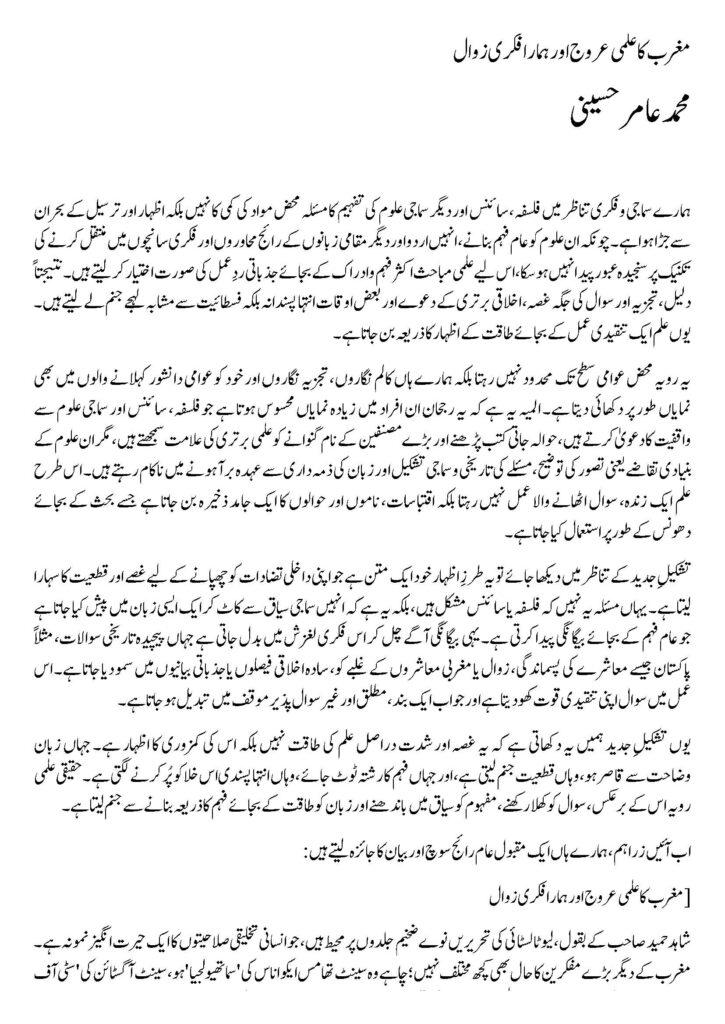
The West’s Intellectual Ascendancy and Our Cognitive Decline
By Muhammad Aamir Hussaini
In our social and intellectual context, the problem of understanding philosophy, science, and other social sciences is not merely one of insufficient content; it is fundamentally a crisis of expression and transmission. Because we have failed to develop a serious command over the techniques required to render these disciplines intelligible—to translate them into the idioms, metaphors, and conceptual frameworks of Urdu and other local languages—academic debates often degenerate into emotional reactions rather than fostering comprehension and insight. As a result, reasoned argument, analysis, and questioning are displaced by anger, moral grandstanding, and, at times, tones bordering on extremism and even fascism. Knowledge thus ceases to function as a critical practice and instead becomes an instrument for the display of power.
This tendency is not confined to the general public; it is strikingly evident among columnists, commentators, and those who present themselves as public intellectuals. The tragedy is that this flaw appears most pronounced among individuals who claim familiarity with philosophy, science, and the social sciences—who cite canonical texts and invoke the names of eminent authors as markers of intellectual authority—yet fail to meet the most basic requirements of these disciplines: the clarification of concepts, the historical and social contextualization of problems, and a responsible engagement with language. In this way, knowledge no longer operates as a living, interrogative process; it hardens into a static repository of quotations, names, and references, deployed not for dialogue but for intimidation.
Viewed through the lens of deconstruction, this mode of expression itself constitutes a text—one that conceals its internal contradictions by resorting to anger and dogmatic certainty. The issue is not that philosophy or science are inherently inaccessible, but that they are severed from their social contexts and articulated in a language that produces alienation rather than understanding. This alienation then mutates into a deeper intellectual error, whereby complex historical questions—such as the underdevelopment and decline of a society like Pakistan, or the dominance of Western societies—are reduced to simplistic moral judgments or emotionally charged narratives. In this process, the question forfeits its critical force, and the answer hardens into a closed, absolute, and non-interrogable position.
Thus, deconstruction shows us that this anger and intensity are not signs of the power of knowledge but expressions of its weakness. Where language fails to clarify, dogmatic certainty emerges; and where the bond of understanding breaks down, extremism rushes in to fill the void. A genuinely scholarly disposition is born from the opposite impulse: from keeping questions open, situating meanings within their historical and social contexts, and using language not as an instrument of domination but as a medium of understanding.
With this in mind, let us now turn to examine a widely prevalent and popular mode of thought and expression in our context.
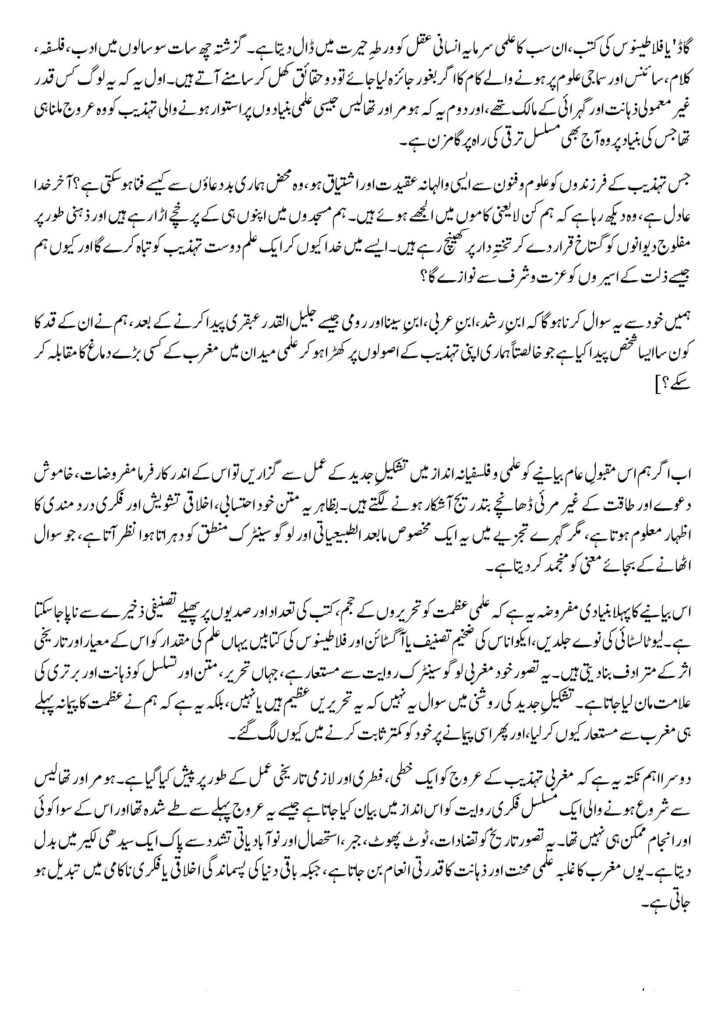
“The West’s Intellectual Ascendancy and Our Cognitive Decline
According to Shahid Hamid, the writings of Leo Tolstoy alone extend across ninety massive volumes—an astonishing testament to human creative capacity. The same can be said of other major Western thinkers: whether it is Saint Thomas Aquinas’s Summa Theologica, Saint Augustine’s City of God, or the works of Plotinus, their intellectual output leaves the human mind in awe. If one closely examines the work produced over the past six or seven centuries in literature, philosophy, theology, science, and the social sciences, two conclusions seem to emerge with clarity. First, these figures possessed extraordinary intellectual depth and brilliance; second, a civilization founded on the intellectual legacies of Homer and Thales was bound to attain the heights it did—a trajectory that continues to sustain its onward march of progress even today.
How can a civilization whose sons display such passionate devotion to knowledge and the arts be destroyed merely by our curses? God, after all, is just; He sees clearly the futile pursuits in which we are entangled. We are blowing one another to pieces inside mosques, and dragging mentally impaired individuals to the gallows after branding them blasphemers. In such circumstances, why would God destroy a civilization devoted to knowledge, and why would He bestow honor and dignity upon a people as shackled by humiliation as we are?
We must therefore ask ourselves this difficult question: after producing towering geniuses such as Ibn Rushd, Ibn Arabi, Ibn Sina, and Rumi, whom have we produced of comparable stature—someone who, standing firmly upon the principles of our own civilization, can intellectually rival any of the great minds of the West?”
If we now subject this popular narrative to the process of deconstruction in an academic and philosophical sense, the underlying assumptions, silent claims, and invisible structures of power at work within it gradually come into view. On the surface, the text appears to express self-accountability, moral anxiety, and intellectual anguish; yet upon closer examination, it reveals itself as a repetition of a particular metaphysical and logocentric logic—one that freezes meaning instead of opening it up to questioning.
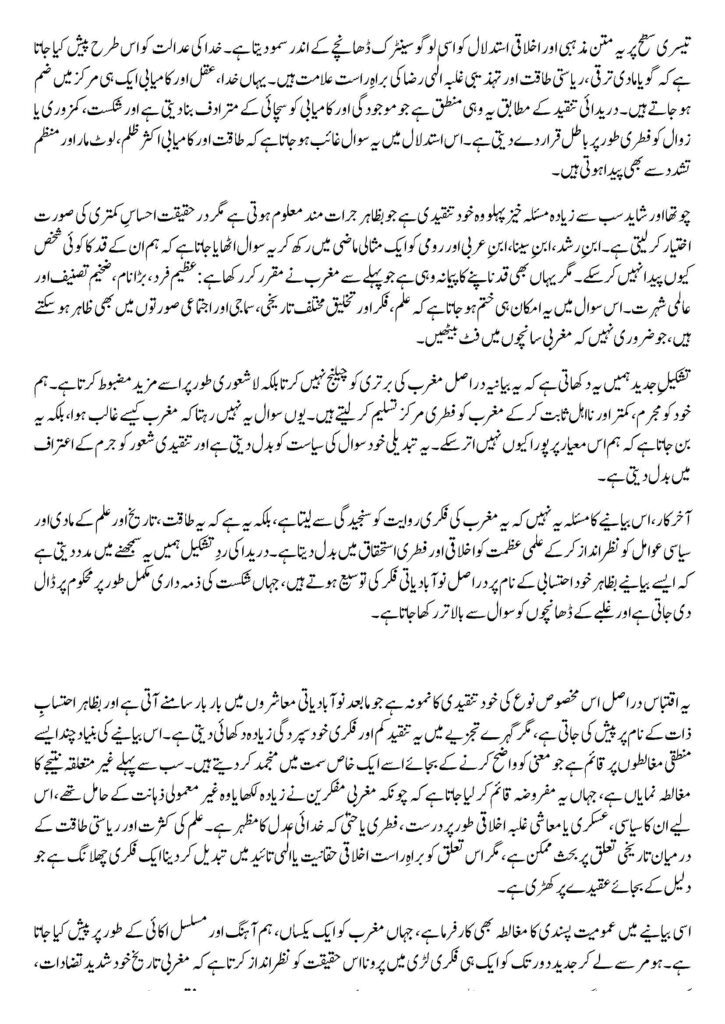
The first fundamental assumption embedded in this narrative is that intellectual greatness can be measured through the sheer volume of writing, the number of books produced, and the accumulation of texts across centuries. Tolstoy’s ninety volumes, Aquinas’s monumental treatise, or the works of Augustine and Plotinus are treated as indicators in which the quantity of knowledge is equated with its quality and historical authority. This assumption itself is borrowed from a Western logocentric tradition that privileges writing, textual accumulation, and continuity as signs of intelligence and superiority. From a deconstructive perspective, the real question is not whether these writings are great, but why we have already adopted Western criteria of greatness—and then proceeded to judge ourselves as deficient by those very standards.
A second crucial element of the narrative is the presentation of Western civilizational ascent as a linear, natural, and inevitable historical process. The intellectual lineage stretching from Homer and Thales onward is depicted as a seamless and uninterrupted tradition, as if Western dominance were preordained and no alternative outcome were ever possible. This view flattens history into a straight line, erasing rupture, contradiction, violence, exploitation, and colonial brutality. Western domination thus appears as the natural reward of intellectual labor and brilliance, while the rest of the world’s marginalization is transformed into a moral or cognitive failure.
At a third level, the text absorbs religious and moral reasoning into the same logocentric framework. Divine judgment is invoked in such a way that material prosperity, state power, and civilizational dominance are presented as direct signs of divine approval. God, reason, and success collapse into a single center. From a Derridean standpoint, this is precisely the logic that equates presence and success with truth, while treating defeat, weakness, or decline as inherently illegitimate. What disappears here is the uncomfortable question that power and success are often produced through oppression, plunder, and organized violence rather than moral virtue.
The fourth—and perhaps most problematic—dimension of this narrative lies in a form of self-criticism that appears courageous but ultimately devolves into an internalized sense of inferiority. By placing figures such as Ibn Rushd, Ibn Sina, Ibn Arabi, and Rumi in an idealized past, the question is raised as to why “we” have failed to produce comparable figures today. Yet even here, the yardstick of comparison remains unmistakably Western: the great individual, the monumental name, the voluminous oeuvre, and global recognition. This framing forecloses the possibility that knowledge, thought, and creativity might emerge in different historical, social, and collective forms—forms that do not necessarily conform to Western molds.
Deconstruction thus reveals that this narrative does not truly challenge Western superiority; rather, it unconsciously reinforces it. By portraying ourselves as guilty, inferior, and incapable, we tacitly accept the West as the natural center. The question shifts from how the West came to dominate to why we failed to measure up. In doing so, the politics of questioning itself is transformed: critical inquiry gives way to an implicit confession of inadequacy, and critique is replaced by self-indictment.
Ultimately, the problem with this narrative is not that it takes the Western intellectual tradition seriously, but that it transforms intellectual achievement into a moral and “natural” entitlement by stripping it of the material and political conditions through which power, history, and knowledge are actually produced. Derrida’s deconstruction helps us see that such narratives, presented in the name of self-criticism, in fact function as extensions of colonial thought: they place the entire burden of failure on the colonized or the subordinate, while rendering the structures of domination themselves immune from questioning.
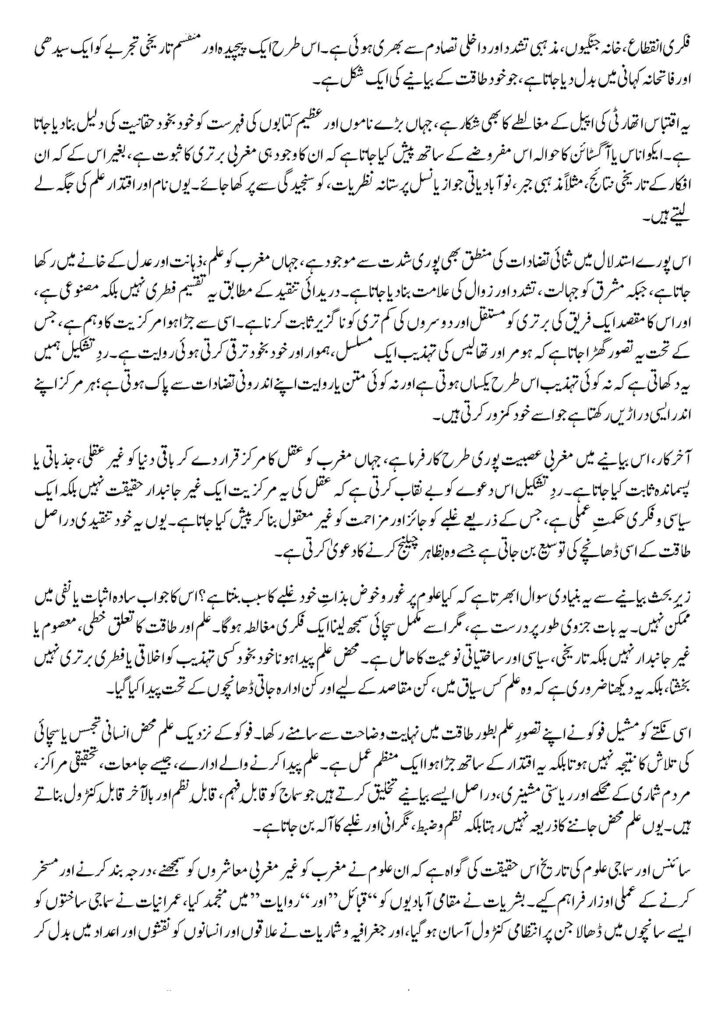
This passage is in fact an example of a particular kind of self-criticism that repeatedly appears in post-colonial societies. It is presented, on the surface, in the name of self-accountability, yet on closer examination it appears less as genuine critique and more as an act of intellectual self-surrender. The narrative rests on a series of logical fallacies that do not clarify meaning but instead freeze it in a predetermined direction. Most prominent among these is the fallacy of non sequitur, where it is assumed that because Western thinkers wrote more or possessed exceptional intellectual capacities, their political, military, or economic dominance must therefore be morally justified, natural, or even an expression of divine justice. While a historical relationship between the production of knowledge and state power can certainly be debated, turning that relationship directly into moral legitimacy or divine endorsement is an intellectual leap grounded in belief rather than reason.
Alongside this operates the fallacy of hasty generalization, whereby “the West” is treated as a single, uniform, and harmonious entity. Stringing together figures from Homer to the modern era into one continuous intellectual chain ignores the fact that Western history itself is marked by profound contradictions, intellectual ruptures, civil wars, religious violence, and internal conflicts. In this way, a complex and fractured historical experience is converted into a linear and triumphalist narrative, which itself functions as a discourse of power.
The passage is also shaped by the fallacy of appeal to authority, in which a list of great names and monumental books is taken as self-evident proof of legitimacy. References to Aquinas or Augustine are presented as if their very existence confirms Western superiority, without any serious engagement with the historical consequences of their ideas—such as religious coercion, colonial justification, or racialized modes of thought. Here, names and prestige displace critical knowledge.
Throughout this argument, the logic of binary oppositions operates at full force: the West is placed in the categories of knowledge, intelligence, and justice, while the East is confined to ignorance, violence, and decline. According to Derridean critique, this division is not natural but artificial, designed to stabilize the superiority of one side and render the inferiority of the other inevitable. Closely tied to this is the illusion of centrality—the belief that the civilization of Homer and Thales represents a continuous, smooth, and self-propelling tradition. Deconstruction reveals that no civilization is ever so homogeneous, and no text or tradition is free of internal contradictions; every center contains fissures that ultimately undermine it from within.
Ultimately, this narrative is thoroughly permeated by Western bias, wherein the West is positioned as the center of reason while the rest of the world is cast as irrational, emotional, or backward. Deconstruction exposes this claim by demonstrating that such centrality of reason is not a neutral or universal truth, but rather a political and intellectual strategy through which domination is legitimized and resistance is rendered irrational. In this way, what appears as self-criticism is in fact an extension of the very structures of power it claims to challenge.
From the narrative under discussion, a fundamental question arises: does reflection upon knowledge in itself produce domination? The answer cannot be reduced to a simple yes or no. This proposition is partially true, but to treat it as a complete truth would itself be an intellectual fallacy. The relationship between knowledge and power is neither linear, innocent, nor neutral; rather, it is historical, political, and structural. The mere production of knowledge does not automatically confer moral or natural superiority upon a civilization. What must be examined instead is the context in which knowledge is produced, the purposes it serves, and the institutional frameworks within which it operates.
This point is articulated with particular clarity by Michel Foucault in his conception of knowledge as power. For Foucault, knowledge is not simply the outcome of human curiosity or the pursuit of truth; it is a systematic process bound up with authority. Institutions that generate knowledge—universities, research centers, census departments, and the machinery of the state—produce narratives that render society intelligible, administrable, and ultimately controllable. Knowledge thus ceases to be merely a means of understanding and becomes an instrument of discipline, surveillance, and domination.
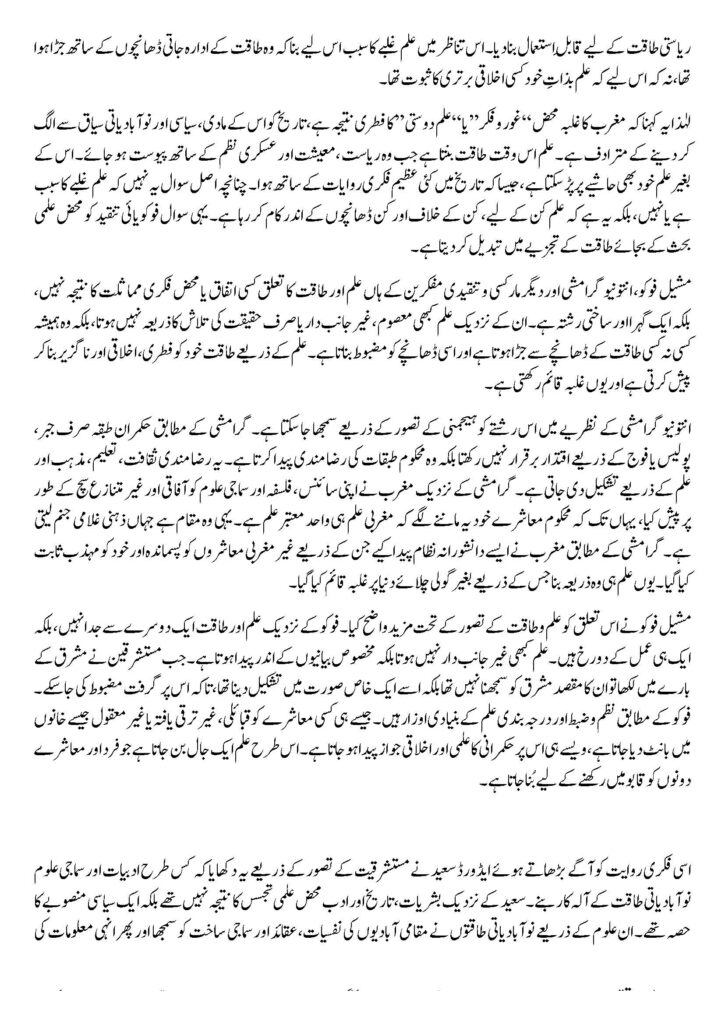
The history of science and the social sciences bears witness to the fact that these disciplines furnished the West with practical tools for understanding, classifying, and subjugating non-Western societies. Anthropology froze indigenous populations into categories of “tribes” and “traditions”; sociology reshaped social structures into frameworks conducive to administrative control; geography and statistics transformed land and people into maps and numbers usable by state power. In this context, knowledge became a source of domination not because it was morally superior, but because it was embedded within institutional structures of power.
To claim, therefore, that Western domination was merely the natural outcome of “reflection” or “love of knowledge” is to detach history from its material, political, and colonial conditions. Knowledge becomes power only when it is fused with the state, the economy, and military order. Detached from these structures, knowledge itself can be marginalized—as has occurred with many great intellectual traditions throughout history. Hence, the crucial question is not whether knowledge produces domination, but for whom, against whom, and within which structures knowledge operates. It is this question that transforms Foucauldian critique from a purely academic discussion into an analysis of power.
In the works of Antonio Gramsci, Michel Foucault, and other Marxist and critical theorists, the relationship between knowledge and power is neither accidental nor merely conceptual; it is structural and deeply entrenched. For them, knowledge is never innocent, neutral, or simply a means of discovering truth. It is always entangled with power and serves to reinforce the very structures within which it is produced. Through knowledge, power presents itself as natural, moral, and inevitable, thereby sustaining domination.
Gramsci conceptualized this relationship through the notion of hegemony. According to him, the ruling class does not maintain power solely through coercion, police, or the military; it also manufactures consent among subordinate classes. This consent is produced through culture, education, religion, and knowledge. Gramsci argued that the West presented its science, philosophy, and social sciences as universal and unquestionable truths, to the point that colonized societies themselves came to accept Western knowledge as the only legitimate form of knowledge. It is here that mental subjugation takes root. The West constructed intellectual systems through which non-Western societies were portrayed as backward while it portrayed itself as civilized—thereby establishing domination without firing a single bullet.
Foucault further sharpened this analysis by insisting that knowledge and power are not separate domains but two sides of the same process. Knowledge is never neutral; it is produced within specific discourses. When Orientalists wrote about the East, their objective was not simply to understand it, but to constitute it in a particular way—so that control over it could be consolidated. Discipline and classification, according to Foucault, are fundamental instruments of knowledge. Once a society is labeled as tribal, underdeveloped, or irrational, the moral and intellectual justification for ruling it is automatically produced. Knowledge thus becomes a web designed to regulate both individuals and societies.
Extending this intellectual tradition, Edward Said demonstrated through the concept of Orientalism how literature and the social sciences functioned as instruments of colonial power. For Said, anthropology, history, and literature were not merely expressions of scholarly curiosity but components of a political project. Through these disciplines, colonial powers studied the psychology, beliefs, and social structures of indigenous populations, then used that knowledge to divide, control, and dominate them. The East was represented as irrational, emotional, and perpetually in need of guidance, while the West appeared as rational, orderly, and salvific. Colonialism was thus reframed as a moral mission.
Thinkers of the Frankfurt School introduced yet another critical dimension to this debate. They argued that modern science and social sciences had come to be dominated by instrumental reason, wherein knowledge no longer sought truth but efficiency and control. Nature and human beings alike were reduced to resources. Under such conditions, knowledge ceased to be a means of emancipation and instead became an instrument for increasing productivity, enforcing discipline, and consolidating political domination.
The cumulative conclusion of these debates is that the West’s intellectual ascendancy was not the product of natural genius or moral superiority, but the expression of a deliberate will to power. Science provided material strength; social sciences offered methods for understanding and exploiting other societies; philosophy and literature framed domination as a civilizational mission and moral duty. Knowledge thus ceased to be a repository of ideas and became a method through which the world was reshaped and controlled. This system does not represent universal justice or natural equilibrium, but rather a power structure that determines who ascends and who is pushed into decline.
Finally, the formation of editorial and institutional infrastructures transformed knowledge from an expression of individual brilliance into a disciplined collective force. Writing alone was never decisive. The decisive shift occurred with the establishment of universities, printing presses, and scientific and research institutions. These structures preserved knowledge, ensured its continuity, transmitted it across generations, and integrated it into the operational logic of the state, economy, and society. Individual intellectual labor was absorbed into an organized system and converted into power—one that not only shaped modes of thought but also acquired the capacity to classify, evaluate, and intervene in the world.
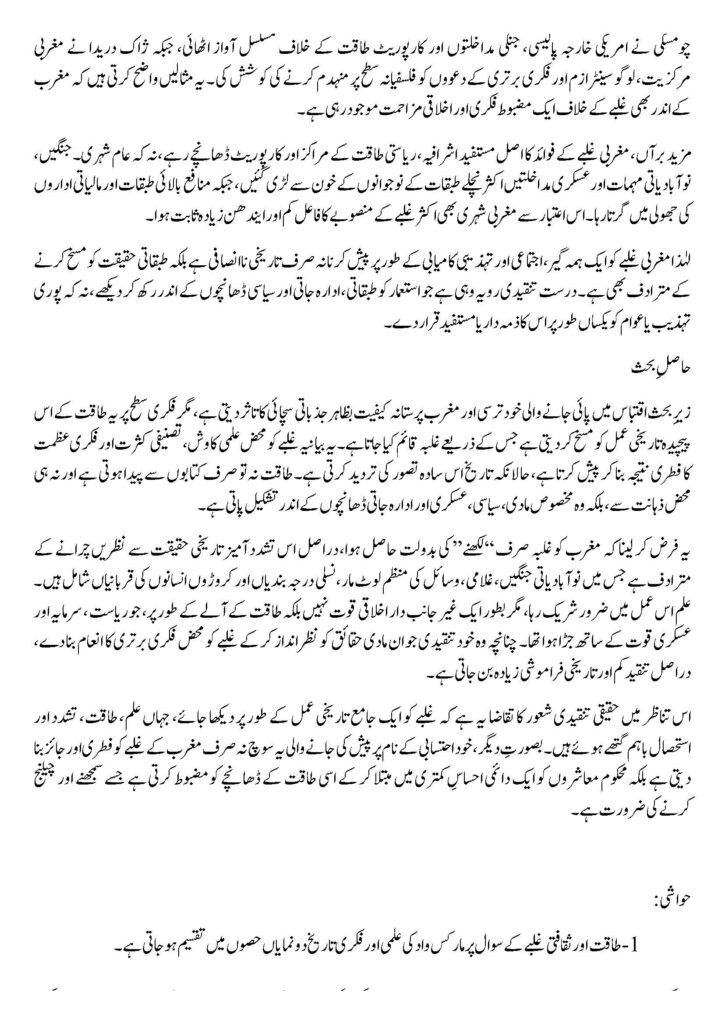
The Class Dynamics and Material Realities of Global Dominance
An essential question arises from the narrative under discussion: has every segment of Western society participated in and benefited from global dominance without distinction? The answer is a resounding no, and to think otherwise is a grave intellectual fallacy. If we perceive Western dominance or colonialism as a uniform, collective experience, we lose sight of internal class contradictions, the structures of exploitation, and the rich tradition of resistance. The truth is that the fruits and responsibilities of Western hegemony have always been distributed with severe class inequality.
During the Industrial Revolution, while Western states were plundering the resources of Asia, Africa, and Latin America through colonial expansion, their own working classes were victims of appalling living conditions. Long working hours in factories, meager wages, the brutal exploitation of women and children, and a complete lack of health and safety were the other face of this “progress.” This is the very contradiction upon which Karl Marx’s entire intellectual edifice stands; he demonstrates that capitalist progress benefits a few exploitative classes, while the workers pay the price with their bodies, their time, and their lives. In this context, Western dominance appears not as a collective moral achievement but as a strategic class project.
Similarly, it is erroneous to assume that the West, as a civilization or society, stood in a singular, unanimous voice in favor of colonialism. There have always been intellectuals, thinkers, and social movements within the Western world who fiercely opposed the colonial, military, and imperial projects of their own states. Noam Chomsky has consistently spoken out against American foreign policy, military interventions, and corporate power, while Jacques Derrida sought to dismantle the claims of Western centrality, logocentrism, and intellectual superiority at a philosophical level. These examples clarify that a robust intellectual and moral resistance against dominance has always existed within the West.
Furthermore, the primary beneficiaries of Western dominance were the elites, centers of state power, and corporate structures—not the average citizen. Wars, colonial expeditions, and military interventions were often fought with the blood of the youth from the lower classes, while the profits flowed into the pockets of the upper classes and financial institutions. In this regard, the Western citizen was often more the “fuel” for the project of dominance than its active perpetrator.
Therefore, presenting Western dominance as a universal, collective, and civilizational success is not only a historical injustice but also a distortion of class reality. A correct critical approach is one that views colonialism within class, institutional, and political frameworks, rather than holding an entire civilization or its people equally responsible or benefited.
Conclusion
The sense of self-pity and “West-worship” found in the original excerpt may create an impression of emotional truth, but on an intellectual level, it distorts the complex historical process of power through which dominance is established. This narrative portrays dominance as the natural result of intellectual effort, prolific writing, and mental greatness—yet history refutes this simplistic notion. Power is birthed neither solely from books nor from mere intelligence; it is forged within specific material, political, military, and institutional structures.
To assume that the West gained dominance merely because of “writing” is to turn a blind eye to the violent historical reality that includes colonial wars, slavery, the systematic looting of resources, racial hierarchies, and the sacrifice of millions of human lives. Knowledge was certainly a participant in this process, but not as a neutral moral force; rather, it functioned as an instrument of power, inextricably linked to the state, capital, and military might. Consequently, any self-criticism that ignores these material facts and frames dominance as a reward for intellectual superiority is less an act of critique and more an act of historical amnesia.
In this light, true critical consciousness demands that dominance be viewed as a comprehensive historical process where knowledge, power, violence, and exploitation are interwoven. Otherwise, this line of thinking—presented in the name of self-accountability—not only legitimizes Western dominance as “natural” but also traps subjugated societies in a perpetual sense of inferiority, strengthening the very power structure that needs to be understood and challenged.
___________________________________________________________
Notes:
1. Marxism, Culture, and the Question of Power
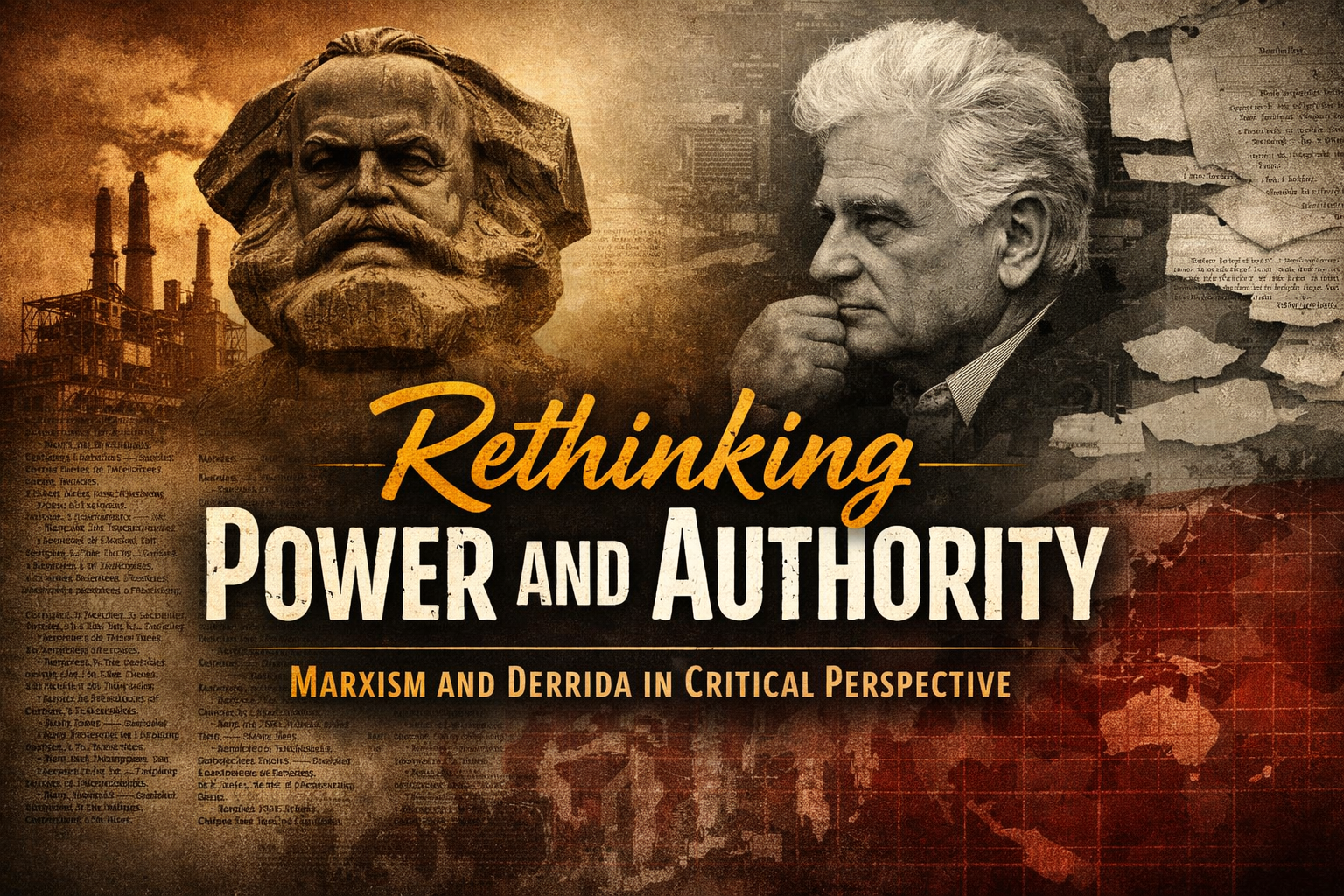
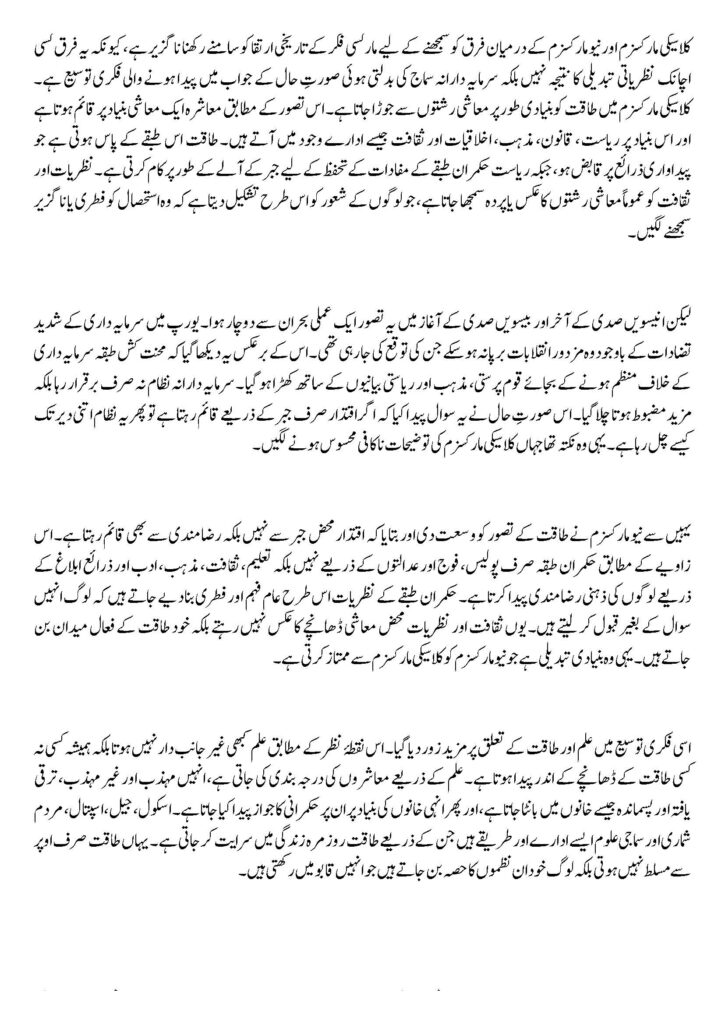
Within Marxist intellectual history, the question of power and cultural domination is broadly divided into two major phases. To understand the distinction between classical Marxism and neo-Marxism, it is essential to situate Marxist thought within its historical development, since this distinction did not arise from a sudden theoretical rupture but rather from an intellectual expansion shaped by the changing conditions of capitalist society.
In classical Marxism, power is primarily understood through economic relations. Society is seen as resting upon an economic base, from which institutions such as the state, law, religion, morality, and culture emerge. Power resides with the class that controls the means of production, while the state functions as an instrument of coercion designed to safeguard the interests of the ruling class. Ideology and culture are generally understood as reflections of economic relations, or as veils that shape consciousness in ways that cause exploitation to appear natural or inevitable.
However, by the late nineteenth and early twentieth centuries, this framework encountered a practical crisis. Despite capitalism’s acute contradictions in Europe, the anticipated proletarian revolutions failed to materialize. Instead of organizing against capitalism, large sections of the working class aligned themselves with nationalism, religion, and state narratives. Capitalism not only survived but grew stronger. This development raised a fundamental question: if power is sustained solely through coercion, how could such a system endure for so long? It was at this juncture that the explanatory limits of classical Marxism became apparent.
Neo-Marxism emerged precisely at this point by expanding the concept of power. It argued that domination is maintained not only through coercion but also through consent. From this perspective, the ruling class governs not merely through the police, the military, and the courts, but through education, culture, religion, literature, and the media, by manufacturing popular consent. The ideas of the ruling class are rendered commonsensical and natural, such that they are accepted without question. Culture and ideology thus cease to be mere reflections of the economic base and instead become active terrains of power themselves. This marks the fundamental shift that distinguishes neo-Marxism from classical Marxism.
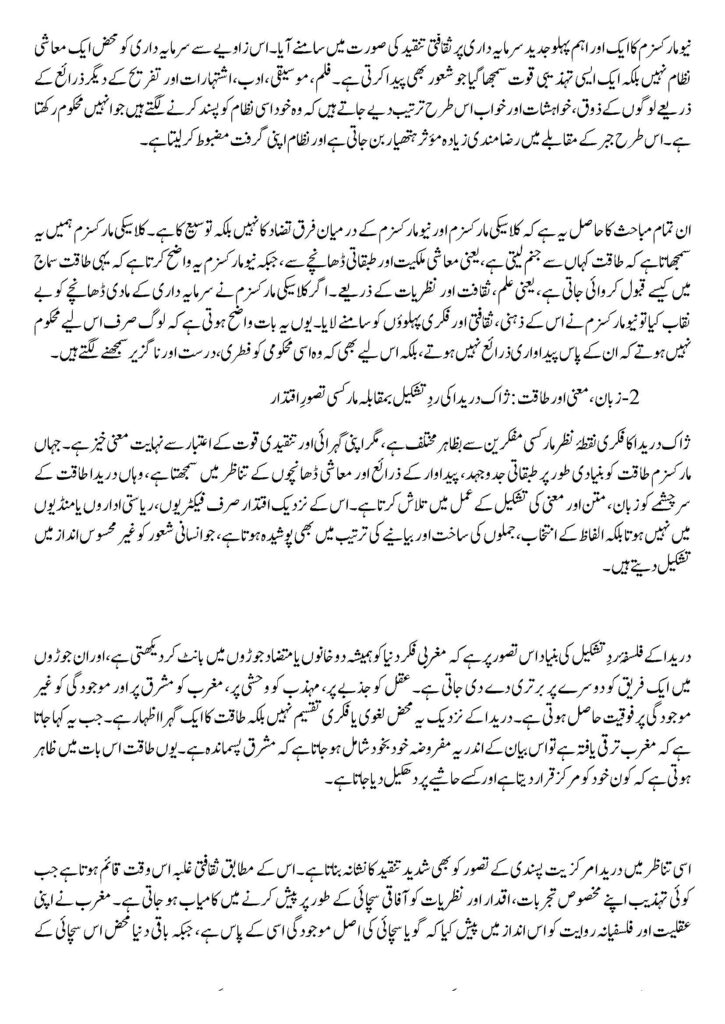
This theoretical expansion placed renewed emphasis on the relationship between knowledge and power. Knowledge, from this viewpoint, is never neutral; it is always produced within specific structures of power. Through knowledge, societies are classified and divided into categories such as civilized and uncivilized, developed and underdeveloped, and these classifications are then used to justify domination. Schools, prisons, hospitals, censuses, and the social sciences are institutions and techniques through which power permeates everyday life. Here, power is not imposed solely from above; individuals themselves become participants in the very systems that regulate and control them.
Another crucial dimension of neo-Marxism emerged as a cultural critique of advanced capitalism. Capitalism came to be understood not merely as an economic system but as a civilizational force that produces consciousness itself. Through film, music, literature, advertising, and other forms of entertainment, people’s tastes, desires, and dreams are shaped in ways that lead them to embrace the very system that subjugates them. Consent thus becomes a more effective instrument than coercion, enabling the system to entrench itself more deeply.
The cumulative insight of these debates is that the difference between classical Marxism and neo-Marxism is not one of contradiction but of extension. Classical Marxism explains where power originates—economic ownership and class structure—while neo-Marxism clarifies how that power is normalized and accepted within society through knowledge, culture, and ideology. If classical Marxism exposed the material structures of capitalism, neo-Marxism revealed its psychological, cultural, and intellectual dimensions. People, therefore, remain dominated not only because they lack control over the means of production, but also because they come to perceive their domination as natural, legitimate, and unavoidable.
2. Language, Meaning, and Power: Derrida’s Deconstruction versus the Marxist Concept of Authority
Jacques Derrida’s intellectual position appears, at first glance, distinct from that of Marxist thinkers, yet it possesses profound critical significance. Whereas Marxism situates power primarily within class struggle, the means of production, and economic structures, Derrida locates the sources of power in language, text, and the processes through which meaning is produced. For Derrida, authority does not operate only in factories, state institutions, or markets; it is also embedded in word choice, sentence structure, and narrative organization—subtle mechanisms that shape human consciousness imperceptibly.
The foundation of Derrida’s philosophy of deconstruction lies in the claim that Western thought habitually organizes the world into binary oppositions, in which one term is privileged over the other: reason over emotion, civilization over savagery, West over East, presence over absence. Derrida argues that these are not merely linguistic or conceptual distinctions but deep expressions of power. When it is stated that the West is “developed,” the assumption that the East is “backward” is already embedded within the statement. Power thus manifests in the capacity to define the center and relegate others to the margins.
In this context, Derrida subjects logocentrism to rigorous critique. Cultural domination, he argues, is established when a civilization successfully presents its own experiences, values, and concepts as universal truths. Western rationality and philosophical tradition have been represented as if they alone possess access to truth, while the rest of the world stands merely in its shadow. Derrida identifies this claim to presence as a philosophical illusion, arguing that what is presented as stable presence is in fact marked by instability and absence.
Derrida’s concept of différance further destabilizes this structure. Meaning, he contends, is never fixed or final; it is always produced through difference and endlessly deferred. Cultural domination attempts to arrest this process by freezing meaning at a particular point—for example, by defining “development” solely in Western terms. Power, in this sense, is the act of imposing a single interpretation as final truth. Deconstruction disrupts this closure by revealing the contradictions and fissures within every text.
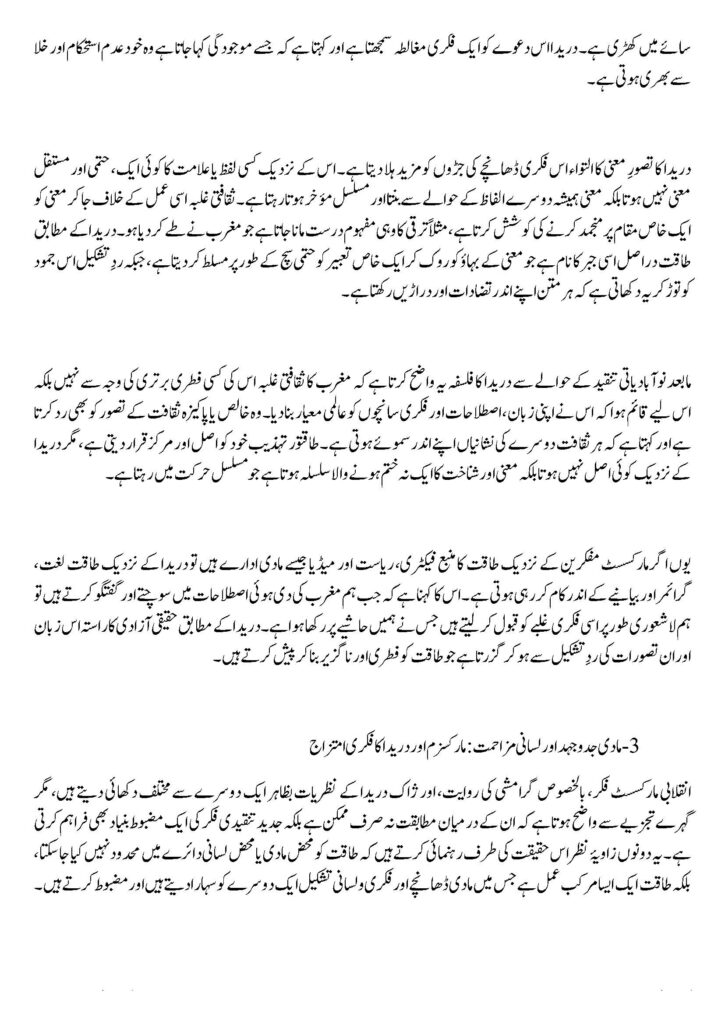
From a post-colonial perspective, Derrida’s philosophy demonstrates that Western cultural dominance does not stem from inherent superiority but from the global imposition of Western language, categories, and conceptual frameworks. He rejects the notion of “pure” culture, arguing that every culture bears traces of others. Dominant civilizations claim originality and centrality, yet for Derrida there is no pure origin—only an endless chain of signifiers in perpetual motion.
Thus, while Marxist thinkers identify the factory, the state, and the media as the primary sites of power, Derrida reveals power at work within dictionaries, grammar, and discourse itself. To think and speak using Western categories is, often unconsciously, to submit to the very structures of dominance that have marginalized non-Western societies. For Derrida, genuine emancipation requires the deconstruction of the language and concepts that present power as natural and inevitable.
3. Material Struggle and Linguistic Resistance: Toward a Synthesis of Marxism and Derrida
Revolutionary Marxist thought—particularly in the tradition of Gramsci—and Derrida’s philosophy may initially appear incompatible, yet closer analysis reveals that their synthesis is not only possible but foundational to contemporary critical theory. Both perspectives underscore that power cannot be confined to either the material or the linguistic domain alone; rather, it is a composite process in which material structures and symbolic formations mutually reinforce one another.
Gramsci’s concept of hegemony and Derrida’s theory of binary oppositions articulate two dimensions of the same phenomenon. Gramsci explains how the ruling class secures dominance not merely through force but by establishing its worldview as natural and inevitable through culture, law, and reason. Derrida exposes how this process operates linguistically, through hierarchical distinctions that privilege one term over another. When examined together, the West/East binary emerges not as a neutral linguistic opposition but as a political instrument that legitimizes colonial and imperial power.
A similar complementarity exists between institutional power and textual analysis. Marxist theory emphasizes schools, media, and other institutions as ideological apparatuses that reproduce dominant ideas. Derrida’s assertion that “there is nothing outside the text” does not refer merely to books but to the entire social and symbolic order within which life unfolds. Critiquing educational curricula or media discourse thus becomes an act of deconstruction. Institutions supply material power, while texts provide meaning, legitimacy, and ideological acceptance.
The rejection of the center further unites these perspectives. Derrida exposes the conceptual instability of any center—whether capitalism or claims of civilizational superiority—while Marxism seeks the practical dismantling of ruling-class centrality. Derrida reveals the internal contradictions of power structures; Marxists can then mobilize these contradictions as the basis for political resistance. This process may be understood as a form of political deconstruction.
Post-colonial scholarship offers the clearest illustration of this synthesis. Thinkers such as Edward Said and Gayatri Spivak combine Marxist class analysis with Derridean linguistic critique to show that subaltern populations are silenced because their language, concepts, and modes of expression are produced by the very systems that dominate them. The language of their material captivity is written by their rulers; consequently, their voices are either distorted or erased.
Taken together, these insights point toward a comprehensive mode of resistance. At the material level, economic exploitation and class hegemony are challenged; at the intellectual level, the conceptual frameworks and narratives that naturalize domination are dismantled. Marxism thus identifies the terrain of struggle, while Derrida reveals how to escape the linguistic and conceptual traps set by power.
4. Logocentrism, Western Superiority, and the Critique of Deconstruction
Derrida’s concept of logocentrism extends far beyond linguistic analysis to the foundations of Western metaphysics itself—a tradition that has, for centuries, shaped notions of superiority, legitimacy, and centrality. Within this framework, reason, speech, and presence are presented as the ultimate criteria of truth. Through this logic, the East is constructed as backward and the West as naturally superior, thereby stabilizing historical power relations. Logocentrism functions as the lens through which the world is perceived and evaluated, generating enduring feelings of inadequacy among non-Western societies.
At its core, logocentrism posits the existence of a central origin or logos from which truth flows. In Western thought, this center has appeared variously as God, Reason, or Science. By appropriating this center, the West has projected its knowledge, textual traditions, and social order as closer to truth, while portraying the rest of the world as deficient by virtue of distance from the center. When it is asked why God would destroy the West, the same logocentric logic is reiterated—material success is equated with moral truth and divine favor.
Deconstruction undermines this centrality by demonstrating that every text or system that claims completeness or superiority harbors internal contradictions. Western thought rests upon binary oppositions—reason/emotion, civilized/savage, white/black, West/East—in which the first term is consistently privileged. These divisions are not natural but political and cultural impositions that legitimize unequal power relations. When Western “great minds” are contrasted with “our humiliations,” the same binary logic is at work.
Attributing Western dominance solely to reflection or prolific writing is itself part of this logocentric trap. Deconstruction reveals that Western “great books” were not merely repositories of knowledge but producers of narratives that morally justified colonialism and global inequality. When non-Western societies search for Western equivalents within their own intellectual traditions and feel inadequate upon failing to find them, they are measuring themselves by standards designed to protect Western centrality.
Ultimately, the critique of logocentrism does not reject reason or knowledge as such; rather, it seeks to dismantle the monopoly through which one civilization claims unwarranted superiority over others. Western dominance was not the outcome of intelligence alone, but of violent material forces and exploitative structures that intellectual traditions often ignored or legitimized. When self-criticism leads only to feelings of inferiority, it becomes not a path to emancipation but an extension of the very colonial logic that Derrida sought to expose through deconstruction.
Urdu Version
About the Author