Afghanistan Admits Terrorism Is the Root Cause of Tension with Pakistan — Khawaja Asif
Islamabad (Special Report)
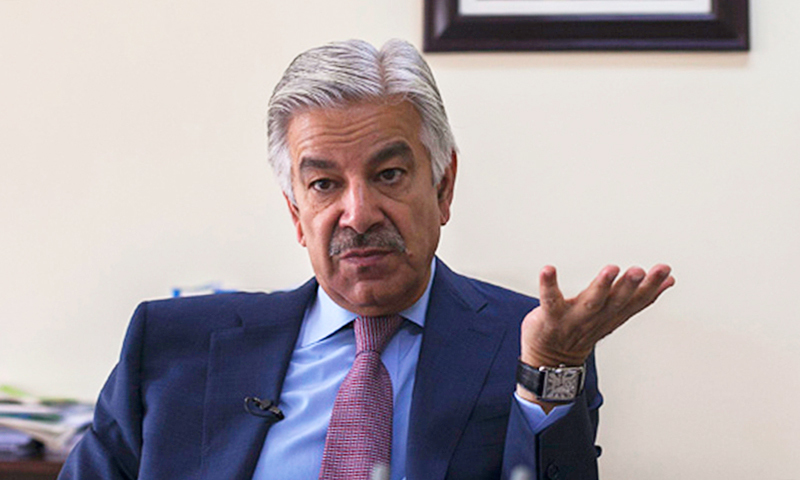
Defense Minister Khawaja Asif has said that Afghanistan has finally acknowledged that the real cause of tension between Pakistan and Afghanistan is terrorism. He stated this during a detailed interview with the international news network Al Jazeera, in which he spoke openly about bilateral relations, regional security, refugee issues, and the future roadmap.
Khawaja Asif said that if the countries of the region fail to control the threat of terrorism, its effects could prove disastrous not only for Pakistan and Afghanistan but for the entire South Asian region. He explained that for many years, border areas have been under the shadow of terrorism, and on several occasions, direct clashes have taken place between the two countries.
According to the defense minister, Pakistan has always desired friendly relations with Afghanistan, but the presence of terrorist groups and cross-border attacks have created mistrust. He said, “The Afghan government is now realizing that terrorism is not just Pakistan’s problem, but a mutual challenge for both countries — and joint cooperation is the only way to overcome it.”
In recent years, relations between Pakistan and Afghanistan have faced many ups and downs. Cross-border terrorist attacks, smuggling, and illegal movements have worsened tensions. Khawaja Asif said, “Pakistan has repeatedly informed the international community that Afghan soil is being used against Pakistan, but now, for the first time, the Afghan government has admitted that terrorism is indeed the root cause of strain.”
He further said that Pakistan’s armed forces and law enforcement agencies have fought a long and difficult war against terrorism, sacrificing thousands of lives. “We want peace, but peace requires responsibility from both sides of the border,” he emphasized.
Khawaja Asif shared that recently, progress has been made on a new Pakistan-Afghanistan agreement, aimed at eliminating terrorism and creating a joint strategy for lasting regional peace. “This agreement will open a new chapter in bilateral relations. We have agreed to enhance cooperation in intelligence sharing, border monitoring, and joint counterterrorism operations,” he added.
He revealed that an important meeting will be held next week in Istanbul, where the agreement will be finalized. Representatives from Qatar, Turkey, and other friendly nations will also participate. Appreciating the constructive role of Qatar and Turkey, Khawaja Asif said, “These countries have always played a positive role for peace, and we are grateful for their efforts in bringing Pakistan and Afghanistan back to the dialogue table.”
He said both countries have decided to restore border trade and the transit system to boost economic activity. “Afghanistan will once again be able to use Pakistani seaports, which will benefit both economies.”
He pointed out that in the past, trade relations had nearly frozen due to terrorism and mistrust, but now the situation is changing. “We want the Afghan people to have employment and economic opportunities so they are not exploited by extremist groups. Economic development is the real foundation of peace.”
When asked about Afghan refugees, Khawaja Asif made it clear that Pakistan has always supported its Afghan brothers, but the situation today is different. “Millions of Afghan nationals have been living in Pakistan for decades, but now the government has decided that only those with valid visas and proper documentation will be allowed to stay,” he said.
He emphasized that the government’s aim is not to harm anyone but to uphold the rule of law. “We want all residents to remain within legal boundaries. Illegal stay creates security challenges and puts additional strain on national resources.”
Khawaja Asif also highlighted that the relationship between Pakistan and Afghanistan is not merely political or geographical, but deeply rooted in shared history, culture, and religion. “We are neighbors, and geography cannot be changed. We must move forward together.”
He said that the international community, especially the Muslim nations, should play their role in ensuring lasting peace in the region. “Pakistan desires peace, but peace cannot be achieved through Pakistan’s will alone — it requires collective effort.”
He added that stability within Afghanistan is in Pakistan’s best interest because without it, the entire region cannot progress. “We want a strong, sovereign, and stable government in Kabul that keeps its land safe from terrorist use.”
He further said, “Pakistan has always supported dialogue and political solutions. We have never chosen war or interference. If both countries act sincerely, the dawn of peace will soon rise.”
The upcoming Istanbul meeting is being viewed as a crucial event for regional peace. According to diplomatic sources, high-level delegations from Pakistan and Afghanistan will finalize strategies on counterterrorism, border management, trade facilitation, and refugee repatriation.
Representatives from Turkey, Qatar, and China will also attend to help resolve any potential disagreements through dialogue. Khawaja Asif expressed hope that “this meeting will mark the beginning of a new era in relations. Our goal is to create an environment of trust, cooperation, and stability.”
In conclusion, the defense minister said that Pakistan continues to follow its policy of peaceful neighborhood. “We are not enemies of any nation; we seek friendship with every country that believes in peace, progress, and mutual respect.”
He said that the Afghan people have endured decades of war and destruction, and now is the time for both countries to build a new future together. “If we move beyond past conflicts, we can give the next generations a peaceful and prosperous region.”
He concluded by saying, “Pakistan and Afghanistan may have faced temporary setbacks, but their bond cannot be broken. As neighbors, we must hold each other’s hands for peace and development. Geography cannot be changed — but intentions and attitudes can, and that change will determine the future of this region.”
About the Author