
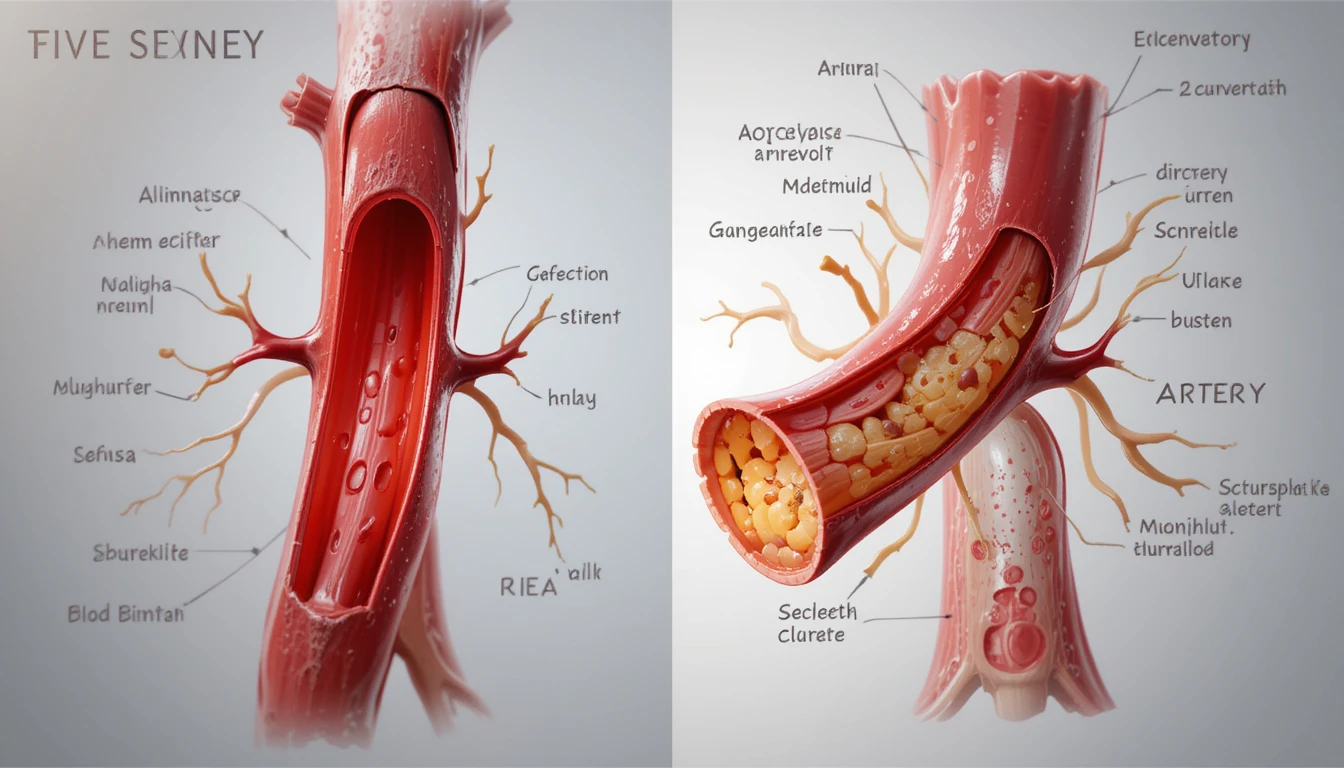
Atherosclerotic Plaque Causes, Risks, and Proven Ways to Protect Your Heart and Arteries
Today, I want to talk in detail about a very important, complex, yet life-saving topic — atherosclerotic plaque.
This is a process that directly affects the health of your blood vessels, and if ignored, it can lay the foundation for life-threatening diseases. Atherosclerotic plaque refers to the accumulation of fat, cholesterol, and calcium particles inside the arteries. Over time, these particles form a layer that narrows the artery and reduces its elasticity.
Our heart pumps clean blood through the arteries to every part of the body, but when this deposited layer — the plaque — begins to grow inside the arteries, blood flow is compromised. As a result, the heart has to work harder, and if the blockage becomes severe, it can lead to a heart attack or a stroke.
Plaque is made up of three primary components: fat, cholesterol, and tiny particles of calcium. Interestingly, calcium actually comes to the arteries to repair and strengthen them, but when it begins to deposit in the wrong place, it becomes harmful. One of the major causes of this is high blood pressure, smoking, elevated cholesterol levels, and high blood sugar levels. All of these factors damage the artery’s inner lining, called the endothelium. Once this lining is damaged, fat and calcium start depositing there, initiating the process of plaque formation.
Recent research has revealed a new aspect of this issue — one that is not only fascinating but also important for both treatment and prevention. In this study, mice were raised in a germ-free environment. This was done so that diseases could be studied under controlled conditions. These mice were fed nutrient-dense diets rich in vitamins and minerals, but since their bodies lacked the microbes normally present under natural conditions, their growth was stunted and several organs failed to fully develop.
From this, a surprising fact emerged: when the mice’s gut microbiome — the good bacteria in the intestines — was removed, inflammation spread throughout their bodies. This inflammation later triggered plaque formation. This means the good bacteria inside our bodies are not only essential for digestion but also play a vital role in arterial health.
Many people believe our bodies are completely sterile and free of bacteria, but the reality is the opposite. Our bodies always host different types of microbes, including disease-causing ones such as chlamydia, H. pylori, and staphylococcus. The difference is that some strains are beneficial (friendly) while others are harmful. When the balance between them is disrupted, the plaque-building process accelerates.
This is where vitamin K2 plays a crucial role. It helps prevent plaque formation because it directs calcium to the right places — the bones and teeth — rather than the arteries. A deficiency of vitamin K2 is one of the major reasons calcium deposits in the arteries. This vitamin is primarily produced by good bacteria in our bodies that convert vitamin K from green leafy vegetables into K2. In addition, it is found in cheese, fish, egg yolks, and meat from grass-fed animals. Unfortunately, people are often advised to avoid these foods, which is not always correct.
If you want to find out how much calcium has built up in your arteries, there is a test called the CAC test (Coronary Artery Calcium test). It’s an excellent predictor of heart disease risk. If the test reveals calcium buildup, immediate changes in diet and lifestyle are necessary.
Another important point here is the combination of vitamin D3 and K2. Research has clearly shown that when vitamin K2 is taken alongside D3, its effects are more potent. Vitamin D3 improves calcium absorption in the body, while K2 ensures that calcium reaches the correct locations. Together, they prevent arteries from hardening and improve overall heart health.
Probiotics — supplements or foods that contain good bacteria — are also extremely beneficial for arterial health. These good microbes use vegetables as food and produce vitamin K2. That’s why monitoring what we eat is so important.
If our diet mainly consists of packaged, processed, or fast foods like KFC, McDonald’s, pizza, or burgers, we’re putting ourselves in the danger zone. Such foods not only damage the microbiome but also increase inflammation and accelerate plaque formation in the arteries.
On the other hand, if we consume whole foods — natural, minimally processed foods — we can improve not only our heart health but our overall wellbeing. Organic vegetables, grass-fed meat, fresh fish, free-range eggs, and home-cooked meals are the best choices.
One excellent step could be to create a small kitchen garden. You can grow fresh vegetables and herbs without chemicals, ensuring a constant supply of nutrient-rich food. This is not only great for physical health but also provides mental peace and satisfaction.
In conclusion, remember three basic principles for maintaining heart and arterial health:
- Right dietary choices — Prefer organic and fresh foods.
- Preserve good bacteria — Use probiotic-rich foods and supplements.
- Balanced vitamin intake — Especially the combination of vitamin D3 and K2.
Following these principles can not only prevent atherosclerotic plaque but also significantly reduce the overall risk of heart disease. Health is a long-term investment, and the actions you take today could save your life tomorrow. Take care of yourself and stay healthy.
About the Author